A Life in Goals: A Different Way to Think About Goal Setting
Goal setting has always seemed to be closely tied to the beginning of a new year. January arrives and suddenly we’re thinking about what we want to achieve over the next 12 months. We buy a new planner, make resolutions, set targets and imagine all the things we’re going to have sorted by December. I’ve done it too, and I actually quite like that feeling of a new year and a fresh start. But I’ve never really believed that the things we want most from our lives fit neatly between January and December.
Some goals take years. Some start as nothing more than an idea that sits in the back of your mind for a long time before you’re ready to do anything about it. Sometimes you finally get what you thought you wanted and discover you want something different. Life changes, circumstances change and we change, so it makes sense that our goals will change too. And often, the things that matter most to us aren’t really about productivity or achievement at all.
That thinking is really at the heart of A Life in Goals. It isn’t another yearly planner and it isn’t a book designed to make you squeeze more into every day. I wanted to create somewhere you could step away from the day-to-day for a little while and think about the bigger picture. What do I actually want from my life? What would I love to experience? What would I like to change? What have I been saying I’d love to do for years but somehow never quite get around to? And, probably the most important question of all, what actually matters to me now?
Life goals aren’t just the big achievements
When we hear the word “goal”, I think most of us immediately picture something fairly substantial. Get the promotion, buy the house, lose the weight, save a certain amount of money, start the business or run the marathon. There is absolutely nothing wrong with any of those goals, but they are only one part of a life, and I think sometimes we dismiss the smaller or more personal things because they don’t seem important enough to qualify.
A life goal might be taking your children overseas while they’re still young enough to want to travel with you. It might be learning another language, creating a garden you love, becoming financially comfortable enough to work fewer days, reconnecting with an old friend or finally learning to paint. You might want to live somewhere different one day, take your mum on a holiday, write a book, learn to cook properly, go back to study, spend a month in Italy, have more adventures with your partner, feel stronger, own less, see more of Australia, learn about investing or simply have people over for dinner more often.
Some of those things could change the direction of your life and others might simply make your life a little nicer. I think both are worth thinking about. One of the things I wanted A Life in Goals to do was widen that conversation. Your goals don’t need to impress anyone, they don’t need to sound ambitious enough to justify writing them down, and they certainly don’t all have to be about becoming more successful. If something would add to your life and it matters to you, I think that’s enough.
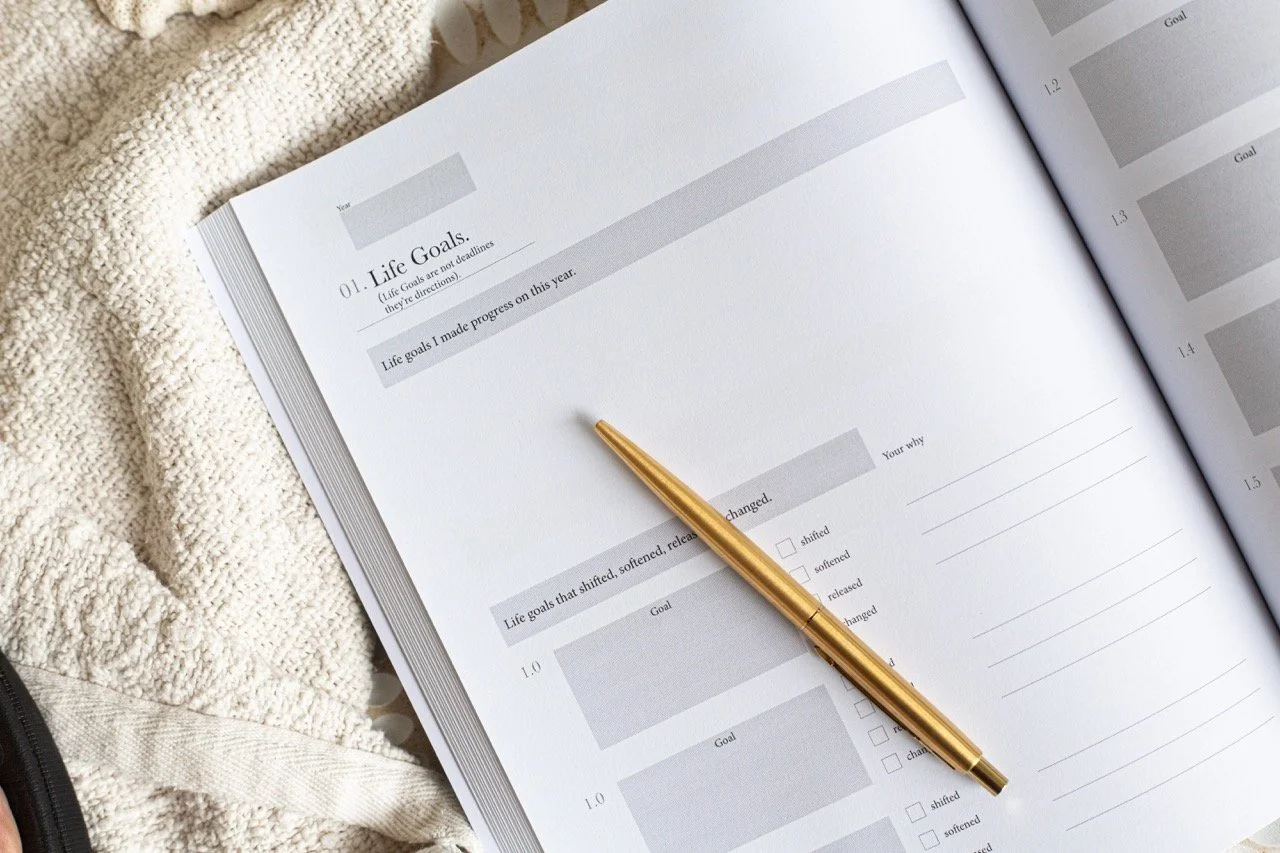
You don’t need to have a five-year plan
This is probably where traditional goal setting can sometimes lose me. We’re often told that we need to begin with a very clear outcome, make it measurable, give ourselves a deadline and then work backwards. That can be incredibly useful when you already know exactly what you’re trying to achieve, but life isn’t always that clear.
What if you simply know that something needs to change? Maybe work doesn’t feel quite right anymore, but you have absolutely no idea what you would rather do. Maybe you’ve spent years concentrating on children, family or your career and suddenly realise that you haven’t thought very much about what you might want next. Or maybe nothing is particularly wrong at all. Life is actually pretty good, but you have this feeling that there are still things you’d like to do and you’ve never really stopped long enough to work out what they are.
You don’t need to have a perfect five-year plan before you start thinking about your life goals. Sometimes the thinking is the beginning. You start with possibilities, things you’re curious about, places that appeal to you and those little thoughts that seem to keep coming back. I’d love to do that one day. I’ve always wanted to go there. Maybe I’d like to try that. I wonder what would happen if…
Not every one of those thoughts needs to become a goal. In fact, most probably won’t. But I think there is something valuable about giving them somewhere to land. Otherwise it’s incredibly easy to have a thought, get distracted by normal life five minutes later and completely forget about it.
That’s one of the reasons I like writing things down. It doesn’t mean I’ve committed myself to doing them. It just means I haven’t lost the thought.
Thinking about your life as a whole
Another reason I wanted to create a life goals journal rather than a traditional planner was because I wanted somewhere to think across the different parts of life. We don’t live in neat categories, even though sometimes it’s useful to separate things out so we can actually see them.
Our work affects our finances. Our finances affect the experiences that are possible for us. Our health affects what we can do. Our relationships have an enormous impact on how our lives feel. Our homes, families, interests, creativity, friendships and sense of adventure all sit alongside one another. Sometimes we’re doing brilliantly in one area while quietly neglecting another, and sometimes something that mattered enormously five years ago barely registers anymore.
So A Life in Goals looks at life more broadly. What do you want from your work and career? What would you like financially? What experiences do you want to have? Where would you like to travel? What would you like for your home? Is there something you’ve always wanted to learn? Are there relationships you want to give more time to? How would you like to feel? And what would you like to do purely because you’d enjoy it?
When you start looking at those things together, you get a much more interesting picture than a conventional list of goals. You also sometimes notice connections you hadn’t thought about before. A financial goal might actually be about wanting more freedom. A career goal might really be about wanting more time. A travel goal might be connected to wanting more adventure in your life. The thing you initially write down isn’t always the whole story.
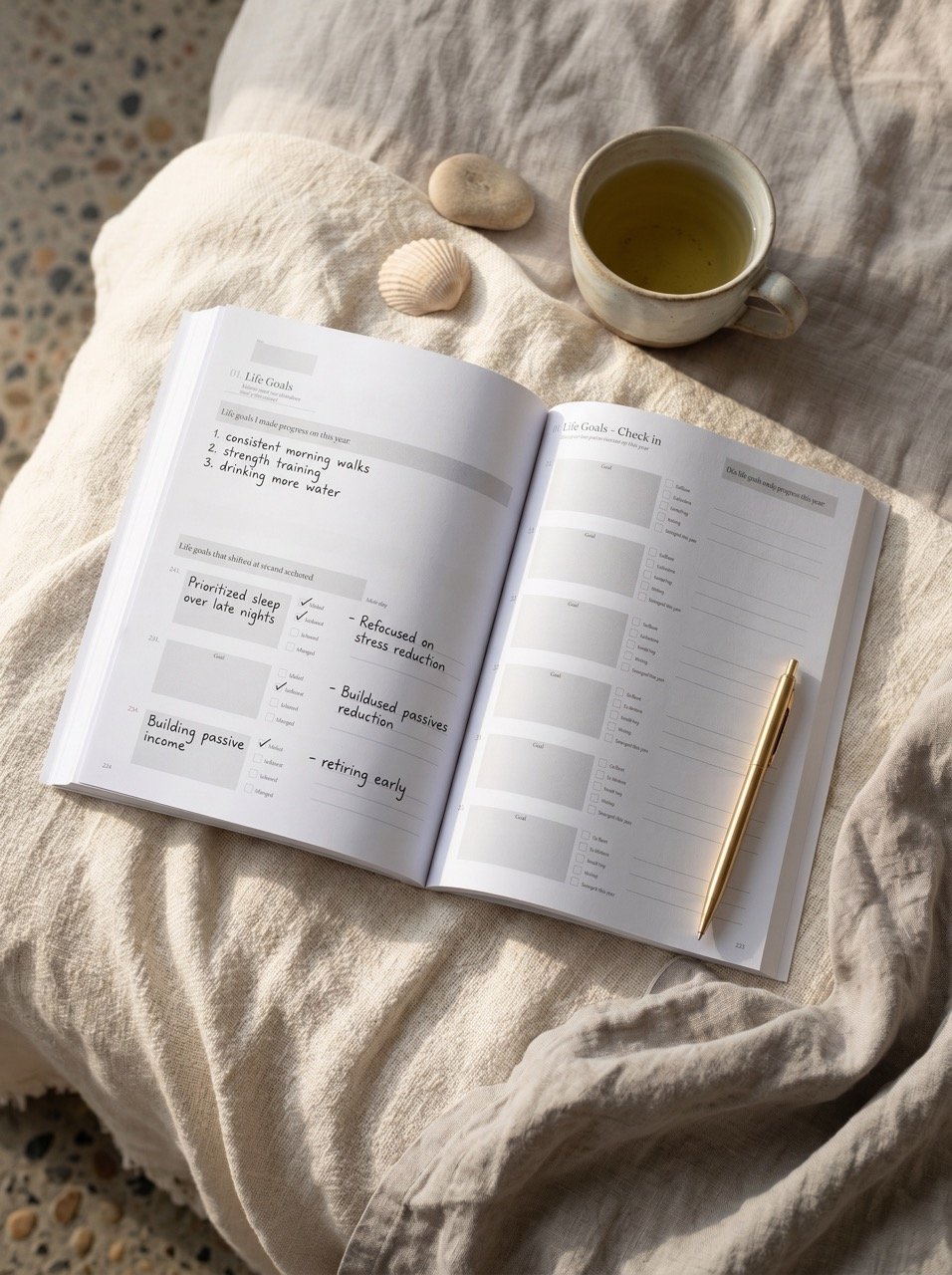
Some things are for now and some are for later
I’ve never particularly liked the idea that every goal needs an immediate deadline. There are things we can start working towards tomorrow, but there are other things that simply aren’t possible at this point in our lives, and I don’t think that means they aren’t worth recording.
You might love to spend three months travelling through Europe, but right now you have children at school, work commitments and a mortgage that make it completely unrealistic. You might want to change careers but know that financially this isn’t the right moment. Perhaps you’ve always wanted to own a little place somewhere by the water, write a book, learn a language or take a long trip around Australia when you retire. Those things can still have a place in your life even if you’re not going to start working towards them next Tuesday.
There can be something quite powerful in simply acknowledging, this is something I would love to do one day. “Not now” and “never” are very different things.
And sometimes writing down a long-term goal starts to subtly change what we do now anyway. The three-month trip might begin with putting a little money aside. A possible career change might make you look up a course just to see what’s involved. The idea of eventually working fewer days might make you think differently about your finances. Writing a book might begin with a note on your phone or one page written at the kitchen table.
You don’t have to turn every dream into a project. Sometimes it’s enough to keep it somewhere until the time is right.
When an idea starts becoming a real goal
There is usually a point where something we’d “love to do one day” starts to feel a little more possible. That’s when I think it can be useful to stop dreaming for a moment and ask some practical questions. If I really wanted to do this, what would actually need to happen? What might it cost? Is there something I need to learn first? Who could I talk to? Could I start smaller? What is one thing I could do now that would bring it a little closer?
This isn’t about turning every lovely idea into homework. I don’t want A Life in Goals to become another source of pressure. It’s more about recognising the goals that matter enough that you want to give them a genuine chance.
A huge goal can feel impossible when you look at the whole thing. The first step is usually much less frightening. Sometimes it’s simply finding out what something costs, opening a savings account, sending an email, researching a course or talking to someone who has already done it.
The gap between I’d love to and I’m going to try can be surprisingly small.
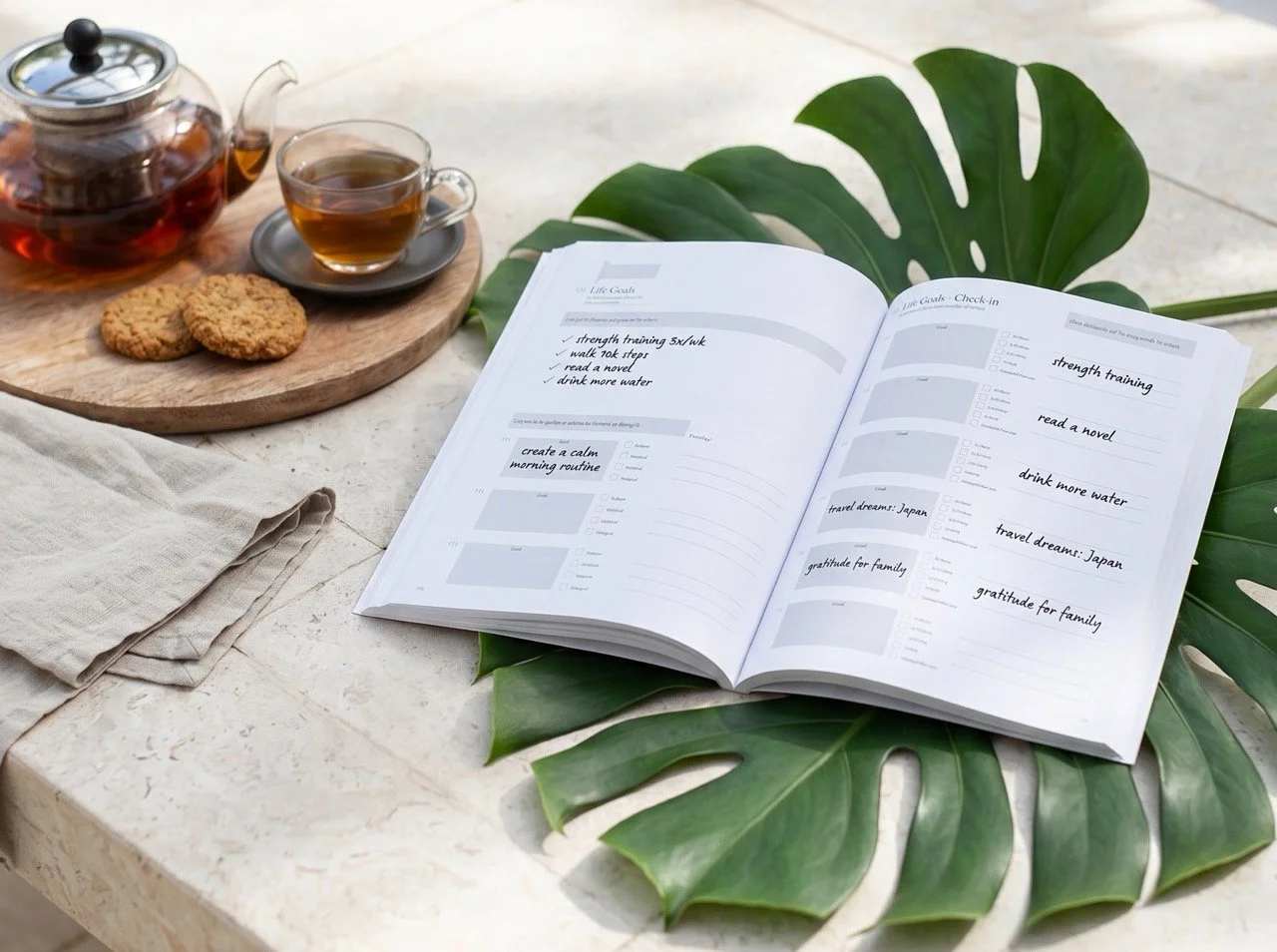
Changing your mind isn’t failing
This is probably one of the ideas in A Life in Goals that matters most to me. You are allowed to change your mind.
A goal isn’t a contract you sign with an earlier version of yourself. You don’t have to keep pursuing something just because you once wrote it down. We change as we move through life, so of course our goals are going to change too.
The things we want in our twenties may look very different from what we want in our forties or fifties. Something that once felt incredibly important can become completely irrelevant. Something we never imagined wanting can suddenly become a priority. Sometimes the goal itself doesn’t disappear, but the way we imagine it changes. The career you once pictured might evolve into something completely different. The place you were convinced you wanted to live may not be where you eventually feel at home. A huge ambition might turn into something quieter that actually suits you better.
That’s why I think revisiting your goals is as important as setting them in the first place. Not because you need to check whether you’re “on track”, but because it’s worth asking whether the goal still belongs to you. Do I actually still want this? Why did I want it in the first place? Has something changed? Is there another version of this goal that fits my life better now? Or am I completely happy to let it go?
There can be just as much satisfaction in crossing something off because you’ve consciously decided you don’t want it anymore as there is in ticking something off because you’ve achieved it.
A journal you return to rather than finish
A Life in Goals isn’t designed to be completed in a weekend, and there is absolutely no expectation that you should sit down and suddenly know what you want from every area of your life.
You might spend an afternoon with the book, write a few pages and then put it away for a month. You might pick it up again because something has changed at work, because you’ve just come back from a holiday with a head full of ideas, because you’ve achieved something you wanted for years or because you’re feeling a little lost and need to think about what’s next.
You may come back six months later and discover that some of your answers are completely different.
That’s part of the point.
I wanted it to be a book you return to rather than a book you finish. Something that can stay with you as your life moves through different chapters, because life doesn’t operate according to an annual planning cycle and our biggest goals rarely fit neatly into one.
Why I think goal setting gets more interesting as we get older
When we’re young, people are constantly asking us what comes next. What do you want to be? Where do you want to live? What sort of career do you want? Do you want to travel? We naturally spend a lot of time thinking forward because so much of our life is still unknown.
Then life gets busy. Careers develop, relationships change, families grow, mortgages need paying and people need us. Years can pass incredibly quickly without us necessarily stopping to ask those bigger questions again.
I think there is something really interesting about setting goals in your 40s, 50s and beyond because by then you know yourself differently. You’ve had enough experience to know that plans change. You know some of the things you thought would matter don’t matter nearly as much as you expected, and hopefully you’re also becoming less interested in what you’re supposed to want.
That doesn’t mean there is less to look forward to. Quite the opposite.
There are still places you haven’t been, things you haven’t learned, experiences you haven’t had, people you haven’t met and ideas you haven’t even thought of yet. There is no age when curiosity about your own future needs to stop.
And perhaps getting older gives us permission to think about goals differently. They don’t all need to be about proving something, getting somewhere or becoming more successful. A goal might simply add something good to your life. It might give you something to look forward to or finally give you the little push you need to do something you’ve been thinking about for years.
Why bother writing any of it down?
Of course, you could keep all of these thoughts in your head. Most of us do. The problem is that thoughts are incredibly easy to lose.
An idea comes to you while you’re driving, walking, travelling, scrolling or talking to someone. You think, I’d really love to do that. Then an email arrives, someone asks what’s for dinner, the washing machine finishes or you remember something you were supposed to do, and the thought disappears.
Writing it down gives it somewhere to live. It doesn’t mean you’re promising to do it. It just means you haven’t lost it.
There is also something about seeing your thoughts on paper that changes them. You start noticing patterns. You realise the same idea has been coming back for years. You notice that several things you want are actually connected, or that something you’ve always described as a dream might be more achievable than you thought.
And eventually, those written goals become something else as well. They become a record.
That’s something I understand far more now because I still have the little notebook I used for writing goals when I was younger. Looking through it now, I can see what mattered to me, what I was worried about, what I wanted and what I thought my future might look like. Some things make me smile, some are surprisingly familiar and some I’d completely forgotten.
I wrote those goals because I was thinking about my future. I didn’t realise that I was also recording my life.
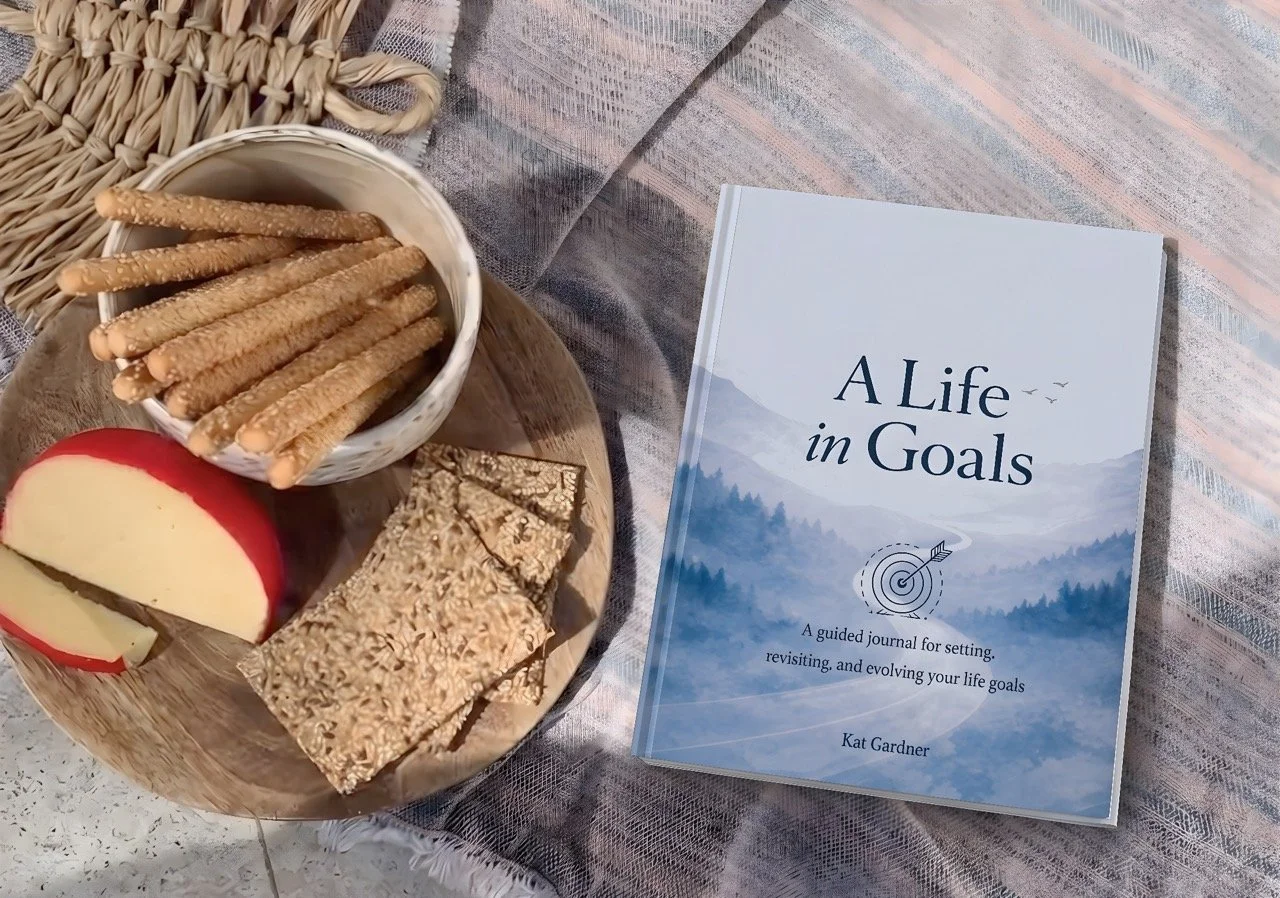
So, what is A Life in Goals?
“Not another planner” has become one of the simplest ways I can describe it, because I don’t think most of us need another system telling us how to squeeze more into our days. There are already plenty of very good planners for appointments, schedules, habits, productivity and daily tasks.
A Life in Goals is deliberately something different.
It’s a guided journal that gives you somewhere to step away from all of that and think beyond this week, this month or even this year. Somewhere to capture the places you’d like to go, the things you’d like to learn, the experiences you want to have, the things you’d like to change and the ideas you aren’t quite ready to call goals yet.
Some of those thoughts might eventually become real goals that you start breaking down into practical steps. Others might sit safely on the page for years before their time comes. Some you’ll achieve, some you’ll change and some you’ll eventually realise you don’t want at all.
That’s life.
I wanted the book to make room for all of it.
And ultimately, I wanted it to be something you keep
I didn’t want to create something that becomes irrelevant when December ends. I wanted A Life in Goals to become more interesting the longer you own it.
Imagine opening it ten years from now and finding something you’d completely forgotten you wanted. Maybe you’ll discover that something you once thought was impossible quietly became part of your everyday life. Perhaps you’ll read a goal you desperately wanted and feel incredibly grateful that it never happened. Or you’ll find the beginning of an idea that eventually took your life somewhere you couldn’t possibly have predicted.
That’s why I think writing down our life goals can become about much more than achievement. Over time, the pages become a conversation with different versions of ourselves.
Who was I then?
What mattered to me?
What did I think was going to happen?
That’s really what A Life in Goals is about. It isn’t about creating a perfect life, achieving everything you write down or having the next five years completely figured out. It’s about giving yourself some time and space to think about what you want from your life, capturing the things that matter to you and allowing those ideas and goals to grow and change as you do.
Because the point isn’t to plan every part of your life.
It’s to make sure you don’t become so busy living it that you forget to think about where you’d still love it to take you.