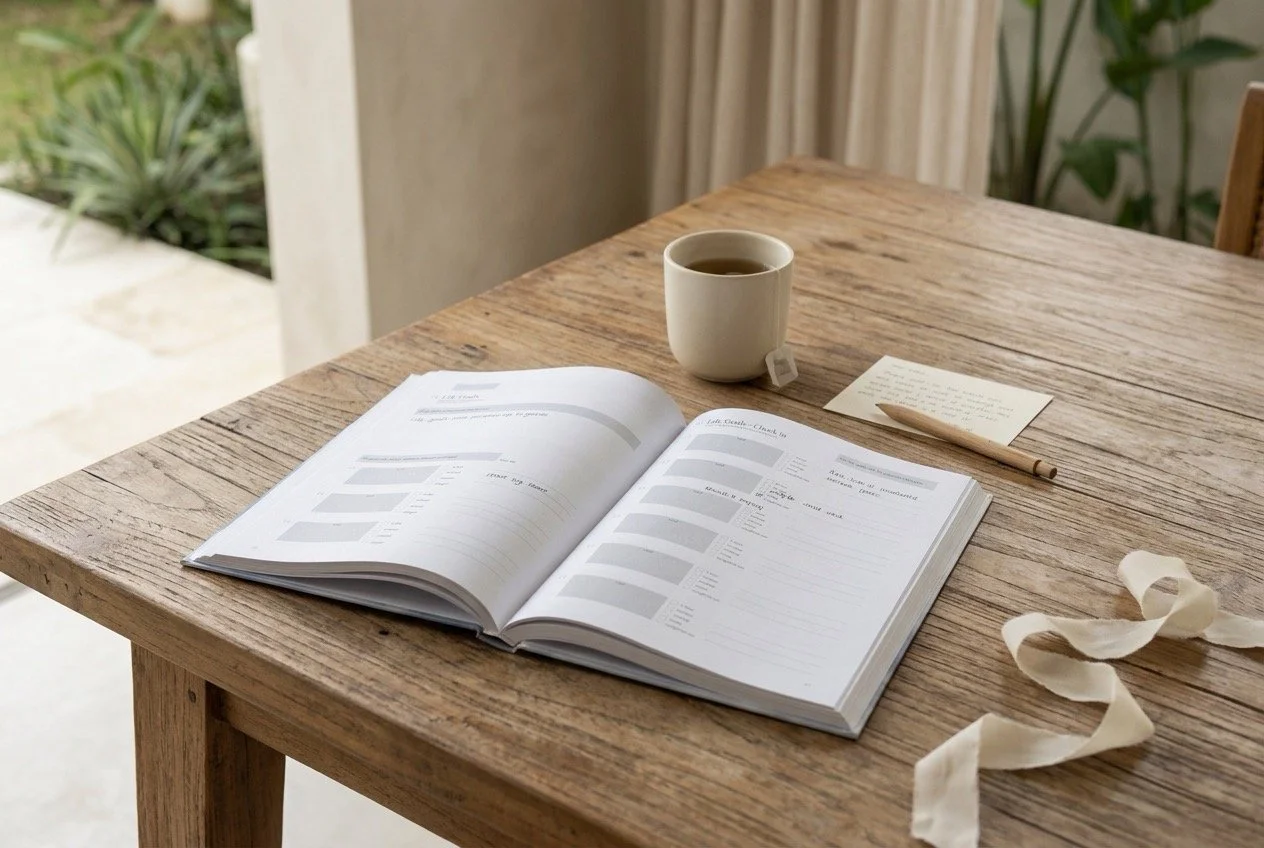
A Gift for the Woman Who Is Always Looking After Everyone Else
Evergreen gifting article for Christmas, birthdays, Mother’s Day and milestone occasions. The focus is not on buying more things, but on giving the woman who carries a lot of other people’s needs something that feels genuinely about her.
There are women who are surprisingly difficult to buy for, not because they are fussy, but because they spend so much of their time thinking about everyone else that when you ask what they would like, they genuinely do not know what to say.
They remember birthdays. They organise appointments. They know who needs picking up, what needs buying, when the forms are due, which relative needs checking on and what everyone else would like for dinner. They are often the person people call when something needs sorting out, and they can be so practised at anticipating other people’s needs that their own barely make it onto the list.
Ask what they want for Christmas or a birthday and the answer is often, “Honestly, I don’t need anything.”
Sometimes that is true. They may already have enough things. But I also think there can be something else underneath it. When you are used to asking what everybody else needs, it can feel oddly difficult to turn the question around.
What do I want?
Not what does the family need. Not what would make the house easier. Not what would be useful. Just: what would I actually like?
That is why I think a thoughtful gift for the woman who is always looking after everyone else can be less about finding the perfect object and more about giving her something that feels unmistakably hers.
The nicest gift may be one that does not ask anything from her
Some gifts come with invisible administration.
A voucher she has to remember to use. An experience she still has to organise. Something lovely for the house that somehow becomes another thing to arrange, wash, display or store. Even a well-intentioned gift can accidentally create another job.
For someone who already carries a lot of mental load, there is something particularly kind about a present that arrives complete.
If you are giving lunch, book the restaurant. If you are giving her a day out, choose the date. If you want her to have an afternoon to herself, make whatever arrangements are needed so she can actually take it. If it is a class, find the one she has talked about and organise it rather than handing her a vague promise to do something together one day.
The difference is small on paper, but not in real life. The gift becomes something she gets to enjoy rather than something else she needs to make happen.
Sometimes care looks like taking one decision away.

Think about what belongs to her, not to the role she plays
It is very easy to buy women gifts connected to the jobs they do for other people.
Something for the kitchen. Something for the house. Something useful for travelling with the family. Something that helps organise everyone more efficiently.
Those things can be lovely if she genuinely wants them, but they are not automatically gifts for her.
A more interesting question is what belongs to the person underneath all those roles.
What did she love before life became this busy? What does she still talk about? What does she stop to look at? Is there something she keeps saying she would like to learn, somewhere she would love to go, or something she has not made time for in years?
Maybe she used to paint. Maybe she loves beautiful books. Perhaps she keeps talking about Italy, gardening, photography, design, food, walking, writing or learning a language. She may have a completely impractical idea she brings up every few months and then dismisses because there is always something more sensible to spend time or money on.
Those comments are clues.
A thoughtful gift does not have to solve her life. It can simply remind her that she exists beyond the things she does for everyone else.

Give her time without telling her to ‘make time’
We tell busy women to make time for themselves as though time is sitting somewhere in a cupboard waiting to be found.
Usually it is not.
Time has to come from somewhere. If she is the person who carries the practical details of family life, telling her to take an afternoon off while leaving everything else exactly as it is can feel more theoretical than generous.
That is why one of the best gifts can be actual, usable time.
Take something off her hands. Organise the children. Bring dinner. Book the massage and make sure the day around it is clear. Plan the lunch. Arrange the weekend. Offer to sit with a parent she usually checks on. If you know there is a task she always carries, take it over properly rather than telling her she deserves a break.
This does not have to be dramatic or expensive. A few uninterrupted hours can feel luxurious when your attention is normally divided into pieces.
And if you are the person giving that time, it is worth resisting the urge to decide how she should spend it. She may want to read, walk, shop, sleep, sit in a café, write, stare at the ocean or do absolutely nothing useful.
That is rather the point.
Give her something that lets her think about her own life for a change
There is another kind of space that can be just as valuable as free time, and that is mental space.
When life is full of immediate responsibilities, the bigger questions are very easy to postpone. Where would I love to travel? Is there something I still want to learn? What do I want work to look like in a few years? Is there something I have always wanted to do? What would make ordinary life feel better? What am I looking forward to that is actually mine?
Those questions are not urgent, which is exactly why they are so easy to lose.
I think many women reach a stage where they have spent years helping everybody else move towards their next thing. Children grow up. Partners change jobs. Families move. Parents need more help. Work keeps changing. Somewhere inside all of that, it can be surprisingly easy to stop thinking about your own next chapter.
That does not mean life is unhappy. Often it means life has simply been full.
A gift that creates a little room to think about what comes next can feel very personal because it is not telling her what she should do. It is giving her permission to ask.
The gift does not need to tell her to become a better version of herself
This matters to me with gifts connected to goals, wellbeing or personal growth.
There can be a very thin line between giving someone something thoughtful and accidentally handing them a project.
A fitness program can sound like criticism. A productivity planner can feel like more work. A book about fixing your habits may be excellent, but it is probably not what I would wrap for someone who already feels responsible for everything.
The nicest version of a future-focused gift should feel expansive rather than corrective.
Not: here is how to improve yourself.
More: here is somewhere to think about what you might still want.
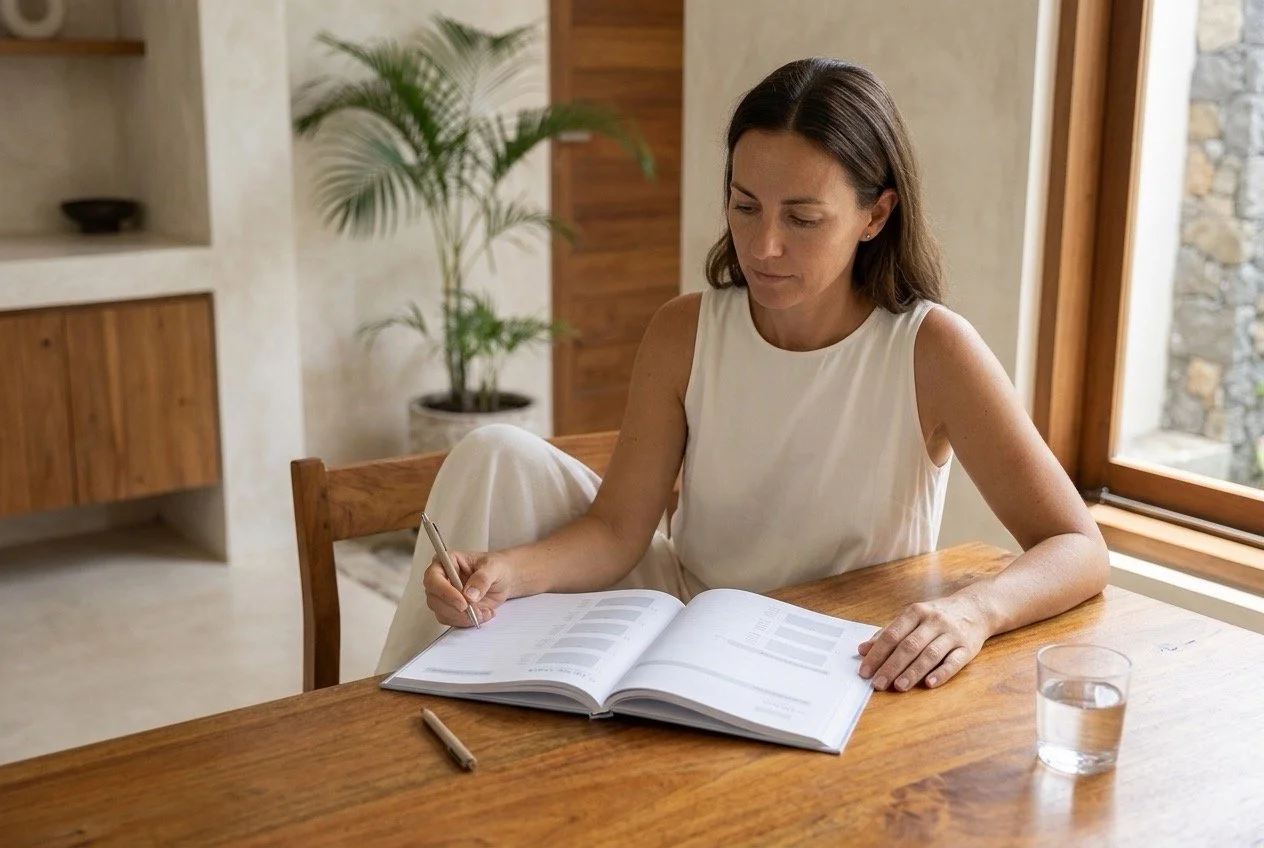
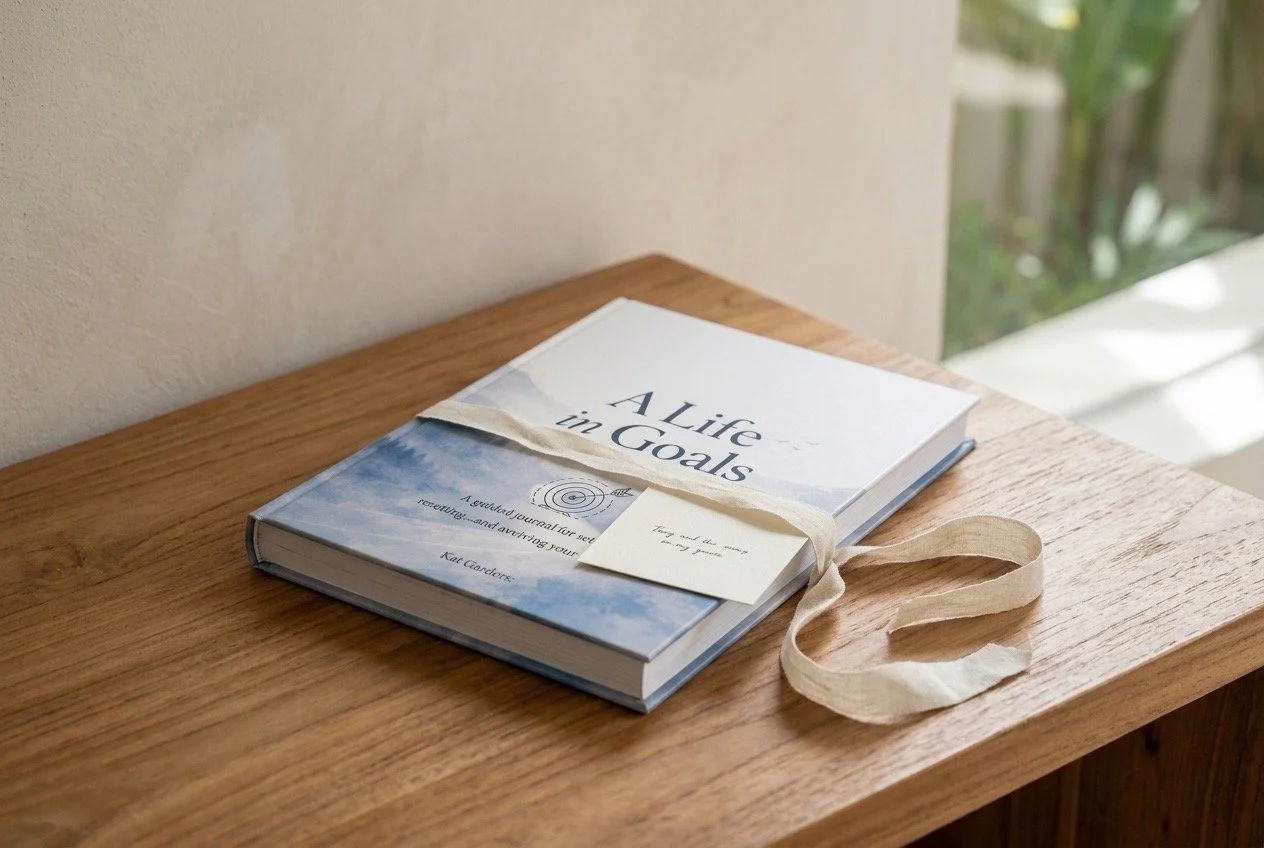
That distinction is one of the reasons I created A Life in Goals the way I did. It is not a yearly planner and it is not built around squeezing more achievement into an already full life. It is a guided journal for thinking across the different parts of life, writing down ideas, keeping the things that matter and coming back as priorities change.
For someone who spends a lot of time thinking about other people, I like the idea that the book asks a question she may not hear often enough: what would you love?
A keepsake can feel different from more ‘stuff’
If the woman you are buying for says she does not need more things, I would take that seriously. But I do not think every physical gift automatically belongs in the category of clutter.
There are objects we keep because they become part of our story.
Photographs. Letters. A piece of jewellery connected to somebody we love. A recipe book full of handwriting. A notebook we used during a particular stage of life. Things that become more valuable because of what happens to them after we receive them.
That is what I love about a journal as a gift when it is the right journal for the person. It is not finished when it is unwrapped.
The empty pages are only the beginning.
Years later there may be handwriting in different pens, plans that happened, ideas that changed, something crossed out, something circled, a note beside a goal that says finally did this. The book can end up carrying a period of life in a way no perfect unused object ever could.
For the person who is difficult to buy for because she already has enough, that kind of gift can earn its place.
Sometimes the most meaningful gift is being seen properly
The older I get, the more I think this is what thoughtful gifts are really about.
Not the price. Not whether the wrapping looks beautiful. Not whether the present is impressive enough to photograph.
It is the feeling that somebody noticed.
They noticed that you have been talking about learning ceramics for two years. They remembered the place you said you would love to visit. They know you have been exhausted. They realise you never buy the beautiful version for yourself. They remembered the author you love or the thing you wanted to try.
For the woman who spends much of her life noticing everybody else, being noticed can be a gift in itself.
That might lead you to buy a journal. It might lead you to book a weekend, frame a photograph, arrange a class, write a letter, take over dinner or give her something completely different.
The object is not really the point.
The message is: I thought about you.

If she says she wants nothing, ask a different question
Instead of asking, “What do you need?”, try thinking about what she would enjoy having more of.
More time. More creativity. More travel. More quiet. More connection. More confidence about the future. More moments that feel like hers.
You do not have to package all of that into one perfect present. But it is a much better place to begin than walking through a department store looking for something vaguely suitable for a woman of a certain age.
The best gift may be surprisingly small.
A booked lunch. A beautiful notebook. A class she mentioned once. A day you have organised from beginning to end. A handwritten card that says something real. A book she can keep. An afternoon with no expectations attached to it.
What matters is that the gift feels like it belongs to her rather than to the endless list of things she does.
Give her something that leaves a little room for herself
There is no single perfect gift for the woman who is always looking after everyone else.
She may love beautiful things. She may prefer experiences. She may want time with you. She may want time completely alone. She may have a head full of future ideas or be at a stage where she has barely had time to think beyond next week.
But I do think there is something lovely about choosing a gift that does not ask her to organise, improve, perform or take care of anyone.
Something that is simply hers.
Something that reminds her there are still parts of life that can be about what she wants to do, learn, see, create, change or enjoy.
Because the woman who is always asking everybody else what they need deserves, every now and then, to have the question turned gently back towards her.
What would you love?