How to Set Life Goals When You Don’t Know What You Want
There is an assumption behind a lot of advice about goal setting that I’ve always found a little unrealistic. Before you can set a goal, apparently you’re supposed to know exactly what you want.
Choose the goal. Make it specific. Give it a deadline. Break it into steps. Start taking action.
That’s all very useful advice when you already know where you’re going. But what happens when you don’t?
What if you know you’d like something to change, but you couldn’t tell someone exactly what that something is? Perhaps work doesn’t feel quite right anymore, but you don’t have a secret dream career waiting in the wings. Maybe life has become so busy with work, children, family, bills and all the normal things that need doing that you haven’t really thought about what you want for a very long time. Or perhaps your life is actually quite good. You’re not unhappy. You just have the feeling that there should still be things to look forward to and you’re not quite sure what they are yet.
I think that’s far more common than we admit.
And I don’t think the answer is to force yourself to come up with a list of impressive goals simply so you can say you have some.
Sometimes the place to begin isn’t “What are my goals?”
It’s simply “What might I want?”
You don’t need to have your life figured out
We spend a surprising amount of our lives being asked what’s next. When we’re young, people want to know what we’re going to study, what career we want and where we see ourselves going. Later, the questions change, but there’s still an expectation that we should have some sort of direction.
The reality is that most lives aren’t lived with that level of certainty.
There are times when we know exactly what we want. There are also times when the path that once seemed obvious stops feeling right, something changes unexpectedly, or we simply reach the end of one chapter without knowing what the next one is supposed to look like.
That doesn’t mean you’re failing at goal setting. It doesn’t mean you lack ambition, and it certainly doesn’t mean there is nothing left for you to want.
It may simply mean you need a little time to think.
I’ve found throughout my own life that I often returned to writing goals precisely when I didn’t know what was happening next. Looking back through the little notebook I used in my twenties, one of the goals I found written in my own handwriting was simply “Have direction.”
I love that now because it reminds me that I wasn’t sitting down to write goals because I had everything worked out. Quite often, I was doing it because I didn’t.
Writing was part of how I tried to find the direction.
And perhaps that’s a more useful way to think about setting life goals when you feel unsure. You don’t need the answers before you begin. The process of thinking, writing and noticing what keeps coming up can be how you start finding them.

Start with what you know you want more of
If somebody asks, “What do you want from your life?”, it can feel like an enormous question. There are almost too many possible answers, which is probably why our minds sometimes go completely blank.
So make the question smaller.
What would you like more of?
More time? More freedom? More travel? More financial security? More creativity? More fun? More confidence? More time outdoors? More weekends away? More dinners with friends? More learning? More time with your partner? More time by yourself?
You don’t need to turn the answer into a goal yet.
Maybe you simply realise that you miss travelling. That’s useful information.
Perhaps you notice that you haven’t done anything creative in years and you used to love it. Maybe you’ve been thinking increasingly about having more flexibility in your work. Perhaps you’d like to feel financially safer, but you’ve never really worked out what “financially safer” would mean for you.
These aren’t finished goals. They’re clues.
And clues are a perfectly good place to start.

Then ask what you’d like less of
This is a question we don’t ask nearly as often, but sometimes it’s easier to answer.
What would you like less of in your life?
Less rushing. Less financial worry. Less clutter. Less time commuting. Less work spilling into evenings. Less saying yes to things you don’t actually want to do. Less time staring at your phone. Less feeling that every weekend disappears into chores.
Again, you don’t need to immediately turn this into a beautifully worded SMART goal.
If your first thought is, I don’t want to spend so much of my life working, that’s enough to start with.
You can explore what sits underneath it later. Perhaps you actually like your work but want a four-day week. Maybe you want to earn the same amount in fewer hours. Perhaps you’re ready for a completely different career. Maybe what you really want isn’t less work at all, but more control over your time.
Often the first thing we write isn’t the goal. It’s simply the doorway into it.
Pay attention to the things you keep saying “one day” about
Most of us have a collection of things we talk about as though there is an imaginary future version of ourselves who will eventually get around to doing them.
One day I’d love to learn Italian.
One day we’ll drive around Australia.
One day I’d love to have my own little business.
One day I’ll learn to paint.
One day I’d love to live somewhere else.
One day I’ll get better with money.
One day I’d love to take Mum to Europe.
One day I’ll have more time to read.
Not every “one day” needs to become a goal. Some are simply nice ideas.
But if you’ve been saying the same thing for five or ten years, it’s worth paying attention.
Why does that particular thought keep coming back?
Would you genuinely like to do it, or do you just like the idea of being the kind of person who does it? Is it impossible right now, or have you simply never looked into what would be involved? If you couldn’t do the full version, is there a smaller version you could experience sooner?
Maybe living in Italy for a year isn’t realistic, but spending three weeks there is. Perhaps changing careers completely isn’t possible now, but doing a course could tell you whether you’re genuinely interested. Maybe owning a holiday home isn’t realistic, but spending a month somewhere you love each year could give you the part of that dream that actually matters.
Sometimes the goal isn’t exactly what we first thought it was.
Think about your life in different areas
When you don’t know what you want, it can help to stop thinking about “my life” as one enormous thing.
Look at it in pieces.
Think about your home. Is there anything you’d love to change about how or where you live? It could be enormous, like moving somewhere completely different, or incredibly ordinary, like finally creating a bedroom you love.
Think about experiences. Where haven’t you been? What haven’t you tried? Is there something you’ve always wanted to see or do?
Think about learning. Is there anything you’re curious about simply because it interests you? A language, photography, investing, cooking, pottery, gardening, history, drawing?
Think about your relationships. Are there people you’d like to see more? Traditions you’d like to create? Trips you’d love to take together?
Think about work. Not just what job title you want next, but how you want work to fit into your life.
Think about money. What would you like money to make possible for you? Security? Travel? Working less? Helping your children? Buying a home? Retiring comfortably?
Think about your health and wellbeing without immediately turning it into a weight-loss target. How would you like to feel? Stronger? More energetic? Less stressed? Able to walk somewhere extraordinary at 70?
And think about fun, because we sometimes forget that one completely.
What would you simply enjoy?
Looking across the different areas of your life takes away some of the pressure to identify one enormous purpose. You may discover that what you want isn’t one big thing at all. It might be a collection of smaller changes and experiences that together would make your life feel more like yours.

Look backwards for clues about what you might want next
We tend to think goal setting should be entirely about the future, but the past can be surprisingly useful.
Think about the periods of your life when you felt most like yourself.
What were you doing?
Who were you spending time with?
What did your days look like?
What did you have time for then that you don’t have time for now?
There may be things you once loved that quietly disappeared as life became busier. Maybe you used to draw, dance, travel, read constantly, go camping, entertain friends, play tennis or spend entire afternoons wandering around galleries.
You don’t necessarily need to recreate an earlier version of your life. You’re not the same person anymore.
But sometimes an old interest reminds you of something you still value.
The same applies to old dreams. Something you wanted at 25 might sound ridiculous now, but another goal may make you wonder why you ever stopped thinking about it.
The past isn’t there to tell you what your goals should be. It can simply provide clues.
Notice what you envy, without judging yourself for it
This one can be uncomfortable, but I think it’s useful.
Sometimes envy is information.
You hear that someone is taking six months off to travel and feel a little pang. Someone tells you they’ve gone back to university at 45 and you can’t stop thinking about it. You see someone working three days a week and suddenly realise how much you want more time.
That doesn’t mean you want their life.
It might simply reveal something missing from yours.
Perhaps you’re not jealous of the person travelling. You’re craving adventure.
You’re not jealous of someone’s career change. You’re craving the courage to try something new.
You’re not jealous of their beautiful home. You want to put more care into the place where you live.
Instead of feeling guilty about the reaction, get curious about it.
Ask yourself: What part of that do I actually want?
The answer may lead somewhere useful.
Don’t confuse what you “should” want with what you actually want
This might be one of the hardest parts of setting personal goals.
There are so many things we’re told we should want.
A bigger career. More money. A bigger home. A certain body. A particular kind of lifestyle. More productivity. Earlier retirement. Constant self-improvement.
Sometimes we genuinely want those things.
Sometimes we don’t.
A goal is much easier to abandon when it was never really yours in the first place.
If you write down “get promoted”, ask yourself whether you actually want the job that comes with the promotion. If your goal is to buy a bigger house, ask what you hope the bigger house will give you. If you’re telling yourself you should start a business, ask whether you actually want to run one or whether you simply want more freedom in your work.
There is nothing wrong with wanting a quieter life.
There is nothing wrong with wanting an enormous one either.
The useful question is whether it feels like your life.
Make an “I’d love to” list before you make a goals list
If you’re struggling to set goals, I wouldn’t begin with a formal goals list at all.
Take a blank page and write:
I’d love to…
Then keep going.
Don’t worry about whether something is realistic, sensible, affordable or achievable. Don’t organise the list into categories. Don’t put deadlines beside anything. And definitely don’t start turning everything into action steps while you’re still trying to think.
You might write ten things. You might write fifty.
Spend a month in Italy.
Have a vegetable garden.
Feel really confident with money.
Take my daughter somewhere special.
Learn to make pasta.
Work four days a week.
See the Northern Lights.
Have a home people love coming to.
Start painting again.
Be able to take a spontaneous weekend away without worrying about the cost.
Some will eventually become goals. Some will stay as ideas. Some might make you laugh six months from now.
That’s fine.
The purpose is simply to give yourself permission to want things before deciding what you’re going to do about them.
Choose what has energy around it
Once you’ve written things down, leave them alone for a while.
Then come back.
Which ideas still catch your attention?
Which ones do you find yourself thinking about away from the page?
Which make you feel excited?
Which feel important?
Which ones have been following you around for years?
You don’t need to turn everything into an active goal. In fact, I think one of the quickest ways to make goal setting miserable is to decide that every interesting idea now requires a project plan.
Choose one or two things that have some energy around them.
Then get curious.
What would this actually look like?
Why do I want it?
What would need to happen?
Is there one small thing I could do to explore it?
If you want to learn Italian, perhaps the first step isn’t “become fluent”. It’s downloading a lesson or finding a local class.
If you want to travel around Australia, maybe the first step is working out how much time you’d realistically need.
If you want to change careers, perhaps the first step is having coffee with somebody who already works in the field you’re considering.
You don’t have to commit to the whole journey to take one step towards finding out whether you want it.
Some goals can stay on the page for years
This is something I feel quite strongly about.
Not every goal needs action immediately.
There will be things you genuinely want that don’t fit your life right now. The money isn’t there. Your children are too young. You’re caring for someone. Work is particularly demanding. The timing simply isn’t right.
Keep the goal anyway.
“Not now” isn’t the same as “never”.
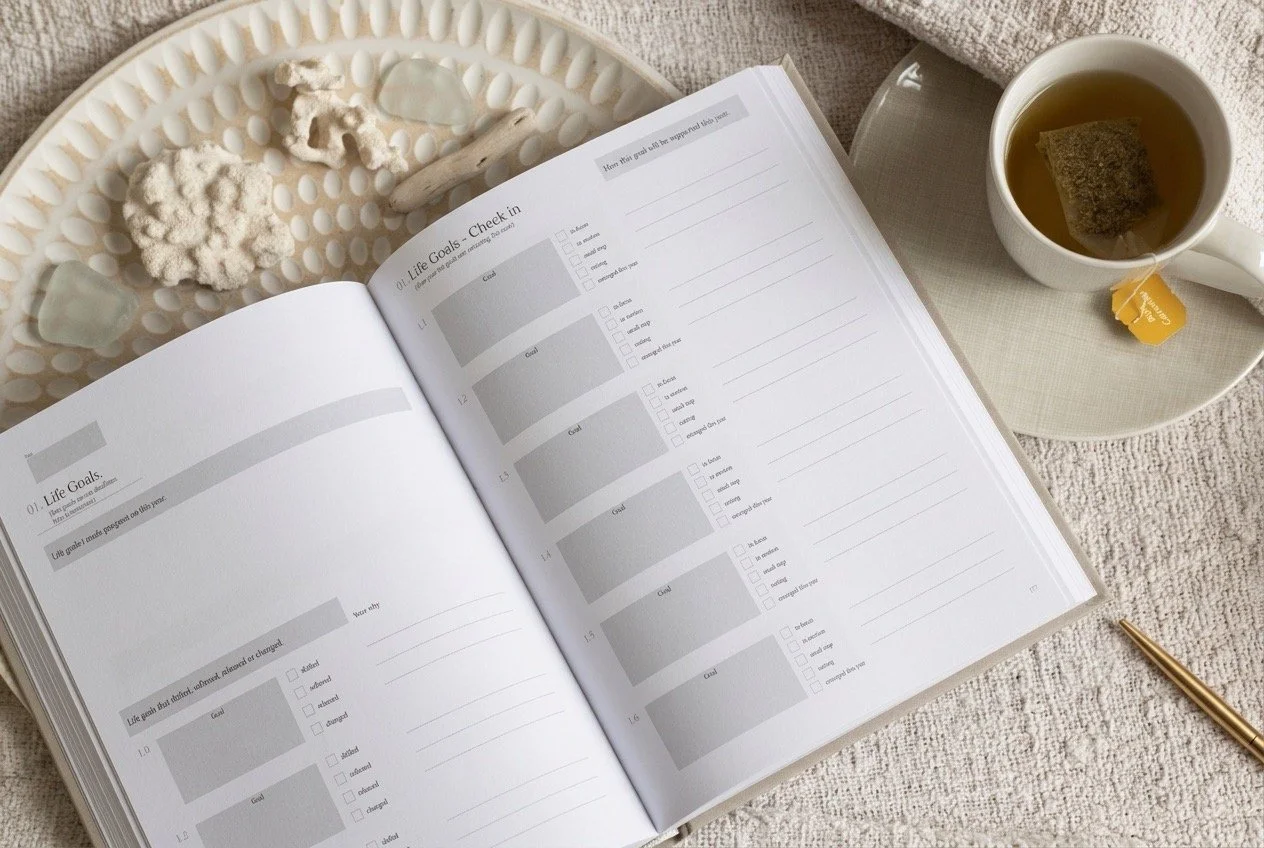
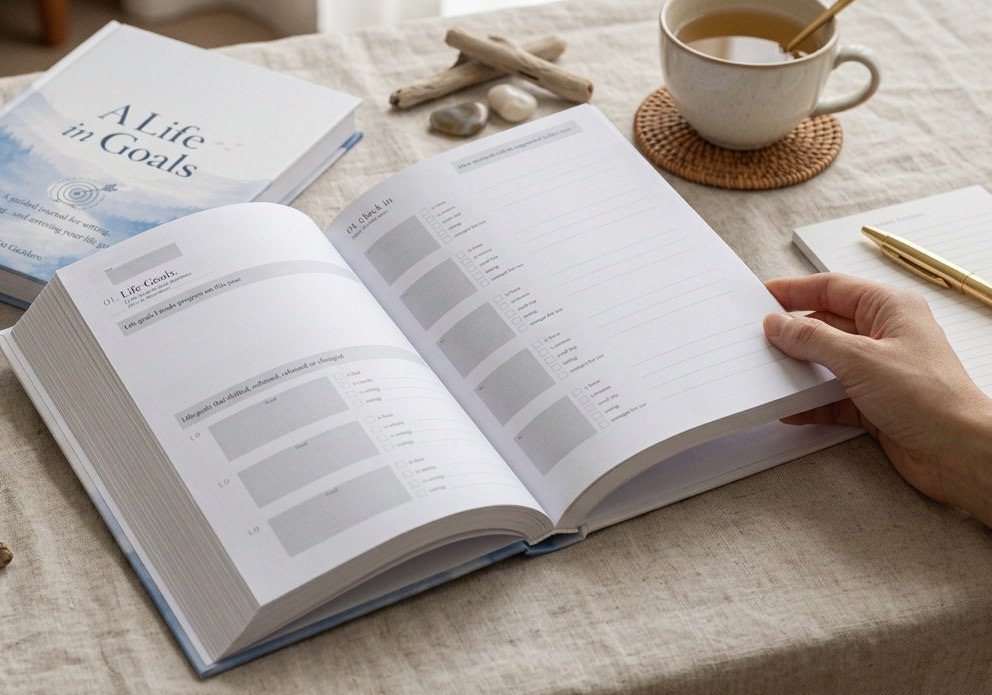
One of the reasons I wanted A Life in Goals to look beyond a single year is because life goals don’t follow annual schedules. Some things take years before the circumstances are right. Others evolve while we’re waiting.
Having somewhere to keep those ideas means you don’t have to either pursue them immediately or forget them completely.
They can wait.
And you can change your mind.
You don’t need 20 goals
If you’ve gone from “I don’t know what I want” to discovering three things you’d genuinely love to do, that’s enough.
You don’t need a goal for every area of your life.
You don’t need a perfectly balanced list.
And you don’t need to fill every blank space simply because it’s there.
Sometimes one goal changes a lot.
A decision to become more financially secure might eventually create more freedom to travel or work less. A goal to improve your health might make an experience possible that you previously thought was beyond you. Learning something new might introduce you to people and opportunities you couldn’t have planned for.
We can’t map all of that in advance.
We can only decide what feels worth moving towards now.
And if you still don’t know what you want?
Maybe this isn’t the moment for a big goal.
Perhaps the most useful thing you can do is start noticing.
Notice what you’re tired of.
Notice what you keep talking about.
Notice the things that make you think, I’d love that.
Notice what you’re curious about.
Write those things down without demanding that they immediately become anything more.
That’s really one of the reasons I created A Life in Goals. Not because I think everyone needs to have an impressive list of goals, but because I think it’s worth having somewhere to think about the life you’re living and the life you might still want.
A guided journal can’t tell you what your goals should be.
But it can give you somewhere to ask the questions, collect the possibilities, return to old ideas and begin recognising the things that matter to you.
You don’t need to know exactly where you’re going before you start.
Sometimes you find the direction by giving yourself permission to wonder where you’d like to go.