A personal reflection on why writing goals still matters to me now, even though I understand far better than I did in my 20s that life changes, goals evolve and the future cannot be planned neatly.
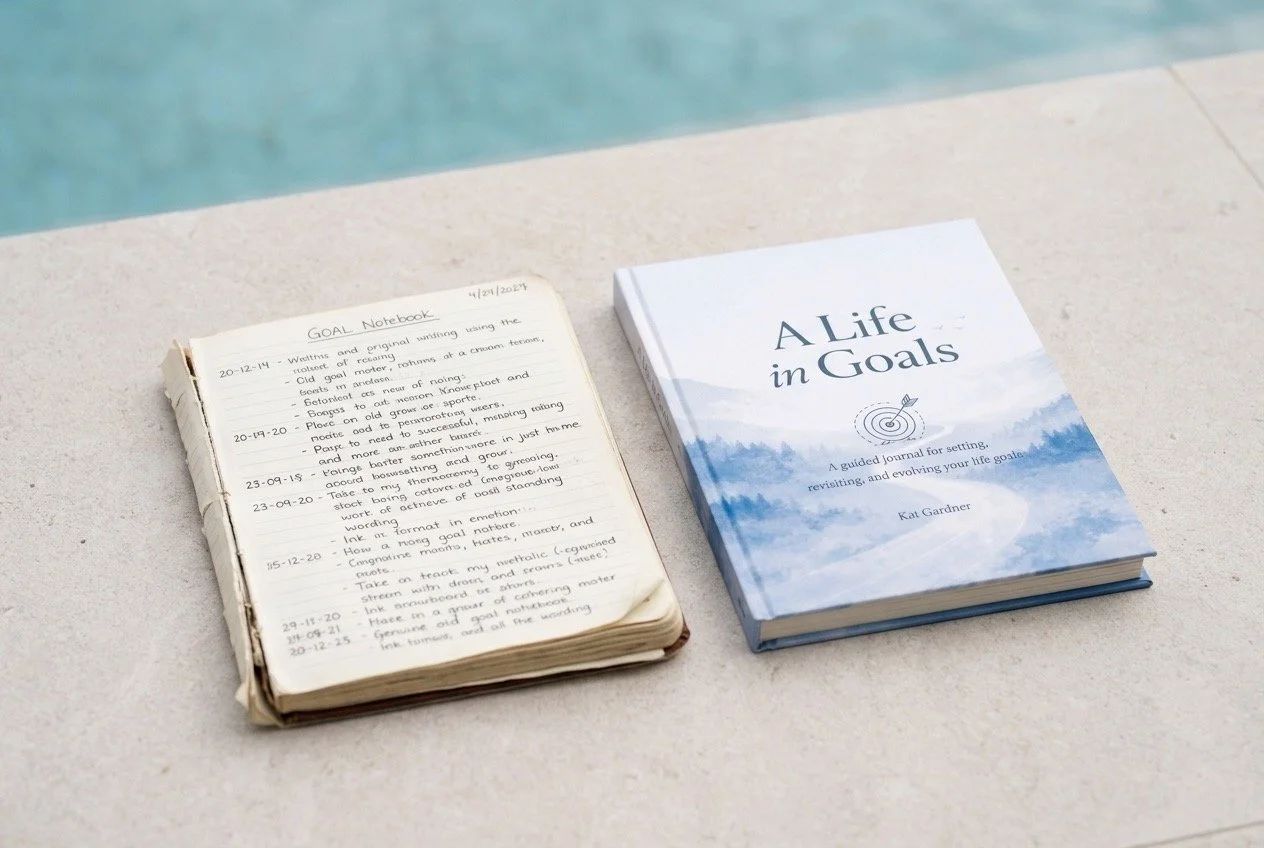
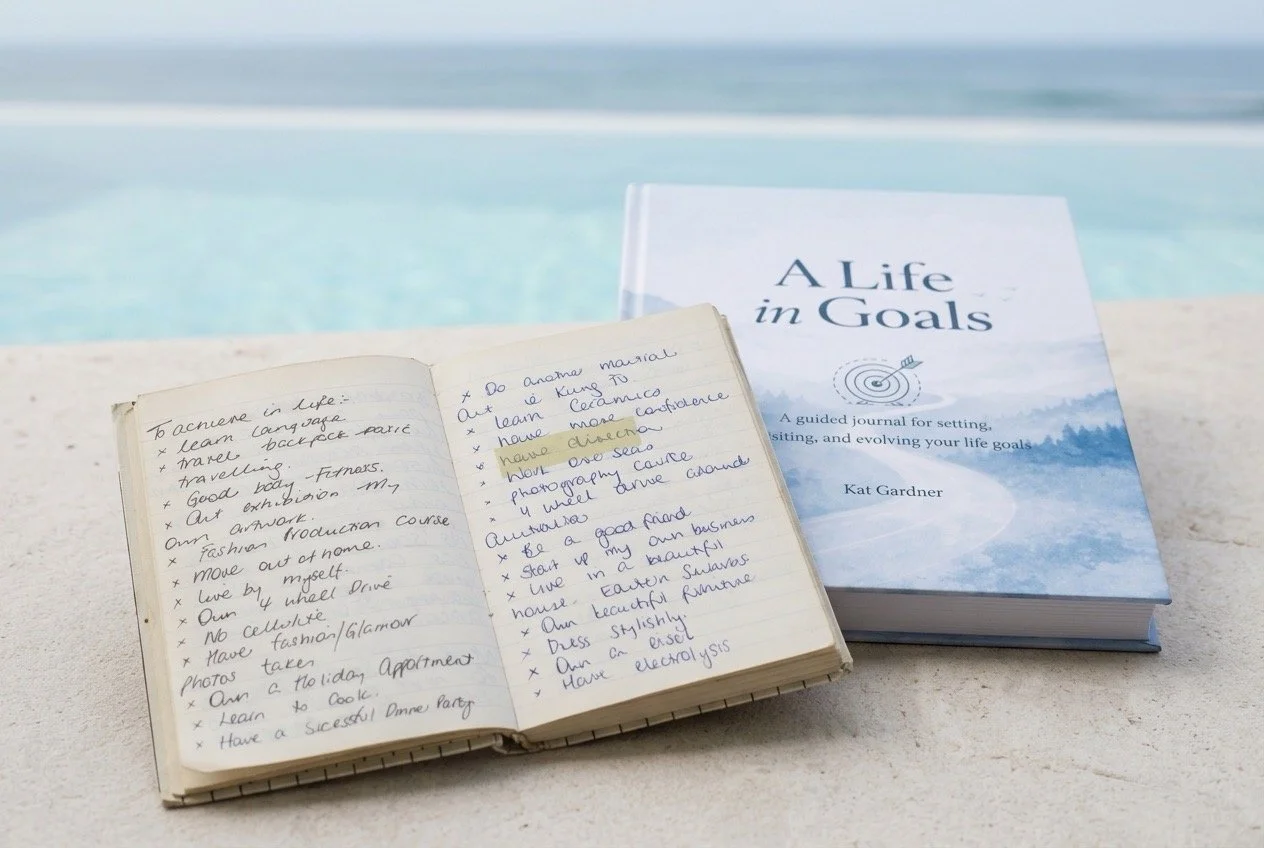
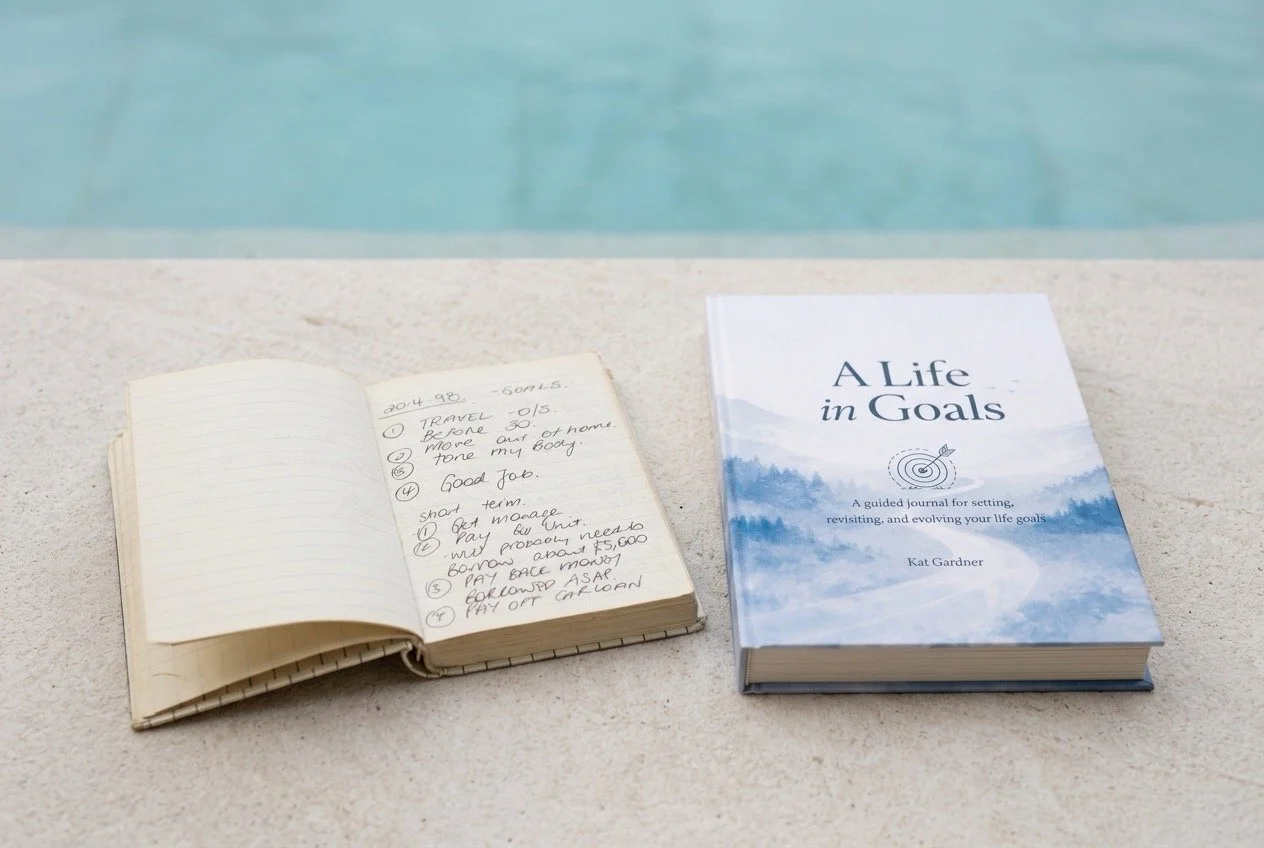
I have been writing goals down in one form or another since I was in my late teens and 20s. Back then I had a tiny black-and-white notebook and a very simple approach: sit down, usually when I felt uncertain about what came next, and write down the things I wanted.
I wrote more about that first little notebook, and what it means to me now, in The Little Book That Eventually Became A Life in Goals.
The lists were wonderfully direct. Travel overseas. Move out of home. Get a good job. Learn things. Save money. Own a home. Have more confidence. Start my own business. Have direction. Some were practical, some ambitious, some quite funny to read now, and some were really just a younger version of me trying to work out what adulthood was supposed to look like.
I am 54 now, and I still write goals.
But I do not write them for quite the same reason.
At 20, I think I believed the goal was the destination. If I could name where I wanted to go, then perhaps I could make life arrive there. At 54, I know far too much about life to believe it works that neatly. Plans change. People change. Circumstances change. Things happen much later than you expected, or in a completely different form, or not at all.
And strangely, knowing all of that has not made writing goals feel less useful to me.
It has made it more useful.

I no longer write goals because I think I can control the future
When you are younger, goal setting can carry a quiet promise that if you are clear enough, disciplined enough and organised enough, you can make life unfold more or less according to plan. I do not think that anymore.
There are simply too many things you cannot predict. Jobs change. Relationships change. Family needs change. Money changes. Health changes. Opportunities appear that you could never have written on a list because you did not know they existed. Sometimes something you were certain you wanted stops mattering. Sometimes an idea you barely noticed becomes one of the most important things you do.
So I do not write a goal now because I think I am issuing instructions to my future self.
I write it because I want to notice what I want at this point in my life.
That distinction feels important. A goal can be a direction without being a guarantee. It can tell me what is pulling at me now, without demanding that I know exactly how the next five years will unfold.
Goals help me hear myself above everything else
By this stage of life, there can be a lot of noise around your own wants. Work has needs. Family has needs. There are people to think about, things to organise, practical decisions to make and responsibilities that do not disappear just because you would like half an hour to think about yourself.
It is very easy to become good at responding to life.
Writing goals makes me stop responding for a moment and ask a different question: what do I want?
Not what needs doing. Not what would be sensible. Not what somebody else is waiting for. Not what I should have achieved by now.
What do I want more of? What do I want less of? What still interests me? What am I curious about? What do I keep saying I would love to do? What part of my life feels exactly right and worth protecting?
Sometimes the answer becomes a clear goal. Sometimes it is only a sentence. Sometimes it is nothing more than 'I would love to...' and I leave it there.
That still counts as useful thinking.
If you are unsure where to begin, How to Set Life Goals When You Don’t Know What You Want explores how to start with questions rather than finished answers.
My goals are less about proving something now
A lot of the goals I wrote when I was younger had achievement built into them. Get the good job. Buy the property. Become more confident. Build the career. Learn the thing. Own the thing. Become the version of myself I thought a capable adult woman should be.
There is nothing wrong with that. Many of those goals were exactly right for that stage of life.
But at 54, I am much less interested in whether a goal sounds impressive.
I care more about whether it would make my life better.
That might still mean a big goal. I am not interested in making goals smaller simply because I am older. There are still things I would love to create, learn, experience and do.
But I am equally interested in goals around time, freedom, health, creativity, money, travel, relationships and the way ordinary life feels. A goal can be about protecting what already works. It can be about having more room in the week. It can be about becoming stronger. It can be about seeing somewhere I have never been. It can be about learning something purely because I am interested.
The goal does not need to look ambitious from the outside.
I understand now that a goal can change without becoming a failure
This may be the biggest difference.
When I was younger, I think a goal felt much more like a promise. If I wrote it down, the implication was that I should make it happen.
Now I see goals as something much more flexible.
I can want something sincerely and still change my mind later. I can take longer than I expected. I can alter the scale of it. I can realise that the reason I wanted it has changed. I can decide that the timing is wrong. I can come back to something after years of doing nothing about it.
And I can let a goal go.
Writing a goal down does not mean I owe that goal the rest of my life.
That actually makes me more comfortable writing honestly, because I do not have to filter every idea through the question: am I absolutely certain I will do this?
I can write down what matters now and trust myself to review it later.

I still want something to look forward to
There is another reason I keep writing goals that is probably much simpler.
I like having something in front of me.
Not in a restless way where the present is never enough. I mean the opposite. I can appreciate the life I have and still like knowing there are things I have not done yet.
Places I have not been. Things I have not learned. Ideas I have not explored. Work I have not made. People I have not met. Ordinary days I have not lived.
A goal gives some of those possibilities a little more shape.
It reminds me that the future is not only something that happens to me. There are still parts of it I get to choose.
At 54, that feels less like pressure and more like permission.
Writing goals lets me see the patterns
One of the unexpected gifts of having kept old goals is being able to see the themes that repeat.
The individual goals change, but certain ideas keep returning: travel, creativity, learning, direction, financial security, home, independence, people I care about, and having something interesting ahead of me.
I would never have noticed those patterns if everything had stayed in my head.
That is another reason I still write things down. A written goal becomes evidence. Years later, you can see what mattered, what disappeared, what changed shape and what keeps quietly resurfacing.
It can also show you how much has already happened. Goals that once felt enormous can become so normal that you forget they were ever goals at all.
Looking back gives the present more context.
I explore why those different wishes sometimes connect in What Is a Goal Ecosystem? And Why Your Goals Don’t Exist in Isolation.
I write goals now to stay in conversation with myself
If I had to explain the biggest change between writing goals in my 20s and writing them now, I think it is this.
Back then, I wanted goals to tell me where I was going.
Now, I use them to keep asking myself where I want to go.
That sounds like a small difference, but it changes everything.
There is no final master list I am trying to complete. There is no point where I expect to have solved my life and reached the end of wanting things.
The conversation continues.
A goal can arrive, sit quietly for a while, become more important, connect to something else, change shape or disappear. I can come back to the page when life feels different and ask whether it still belongs.
That is why I wanted A Life in Goals to be something you keep and revisit rather than something tied to one year.
The writing matters, but the returning matters just as much.
For a practical look at the pages and how to revisit them, see How to Use A Life in Goals.
I know now that the record may matter too
When I wrote in that little notebook in my 20s, I never imagined I would be reading those pages at 54.
I certainly did not think of them as a keepsake.
They were just lists of things I wanted.
Now I see the value differently. The pages contain a version of me I would otherwise remember much less clearly. They show what I was worrying about, what I hoped for, what adulthood looked like from that distance and the things I thought might make me happy.
That makes me think about the goals I write now differently too.
One day, I may look back at them and see something I cannot see yet.
Perhaps I will laugh at some of them. Perhaps I will be surprised by what happened. Perhaps I will realise that one little idea quietly changed the direction of something much bigger.
The page holds more than a plan.
It holds a moment in a life.
So why do I still write goals at 54?
Not because I think I can map the rest of my life.
Not because I need to keep achieving things to prove that I am still ambitious.
Not because every dream needs a deadline.
I write goals because they make me stop and notice what I want.
They give ideas somewhere to live.
They help me see patterns, protect what matters, remember what I am curious about and recognise when something has changed.
They give me direction without pretending I know the whole route.
And they leave a record I can come back to.
At 20, I thought writing goals was about deciding where I wanted to end up.
At 54, I think it is much more about staying awake to the life I am still living.
There is still a future in front of me.
I do not need to know exactly what it looks like.
But I still want to have a say in it.
If you would like a place to write your own goals and return to them as life changes, explore A Life in Goals on Amazon or through the dedicated A Life in Goals page where you can choose your Amazon region.
Kat x
Creator of A Life in Goals