A New Year reflection about moving away from impressive-looking resolutions and towards the lived experience of the year: less rushing, more financial breathing room, more time, more friendship, more travel, more creativity and more ease.
When we think about a new year, it is very easy to picture the things that would look impressive from the outside: the promotion, the renovation, the weight loss, the savings number, the perfectly organised home, the big trip, the morning routine, the course or business idea. There is nothing wrong with wanting any of those things. But there is another question I think is more useful: what would make next year feel better to live? Not photograph better, sound better when you explain it to somebody else, or look like a more successful year from the outside. Feel better from the inside.
The answer may be much less impressive than a resolution
Maybe the thing that would make next year feel better is not a bigger goal at all. It might be less rushing in the morning, more financial breathing room, more time with the people you actually like, a few more weekends away, more creativity, more evenings where work stays at work, more movement because you feel better when you move, or simply more space between commitments. None of those answers is particularly dramatic. They may not make a good before-and-after post. But they can change the lived texture of an entire year.
If you are reconsidering what counts as a meaningful goal, What Are Life Goals? And Why They Don’t Need to Be Huge explores why ordinary changes deserve space too.
Less rushing might be a bigger goal than it sounds
Take something as ordinary as rushing. It is easy to dismiss because it does not sound like a serious life goal. But if you begin most mornings already behind, spend every weekend catching up and move from one commitment to the next with no room around anything, that shapes a huge amount of your life. Wanting less rushing might mean changing one morning routine, saying no to one recurring commitment, leaving earlier, protecting one evening, not booking every weekend, asking for help or accepting that some things can stay undone. None of those changes looks especially impressive, but imagine living 200 mornings next year with slightly less pressure. That is not a small thing.
Financial breathing room can matter more than a perfect number
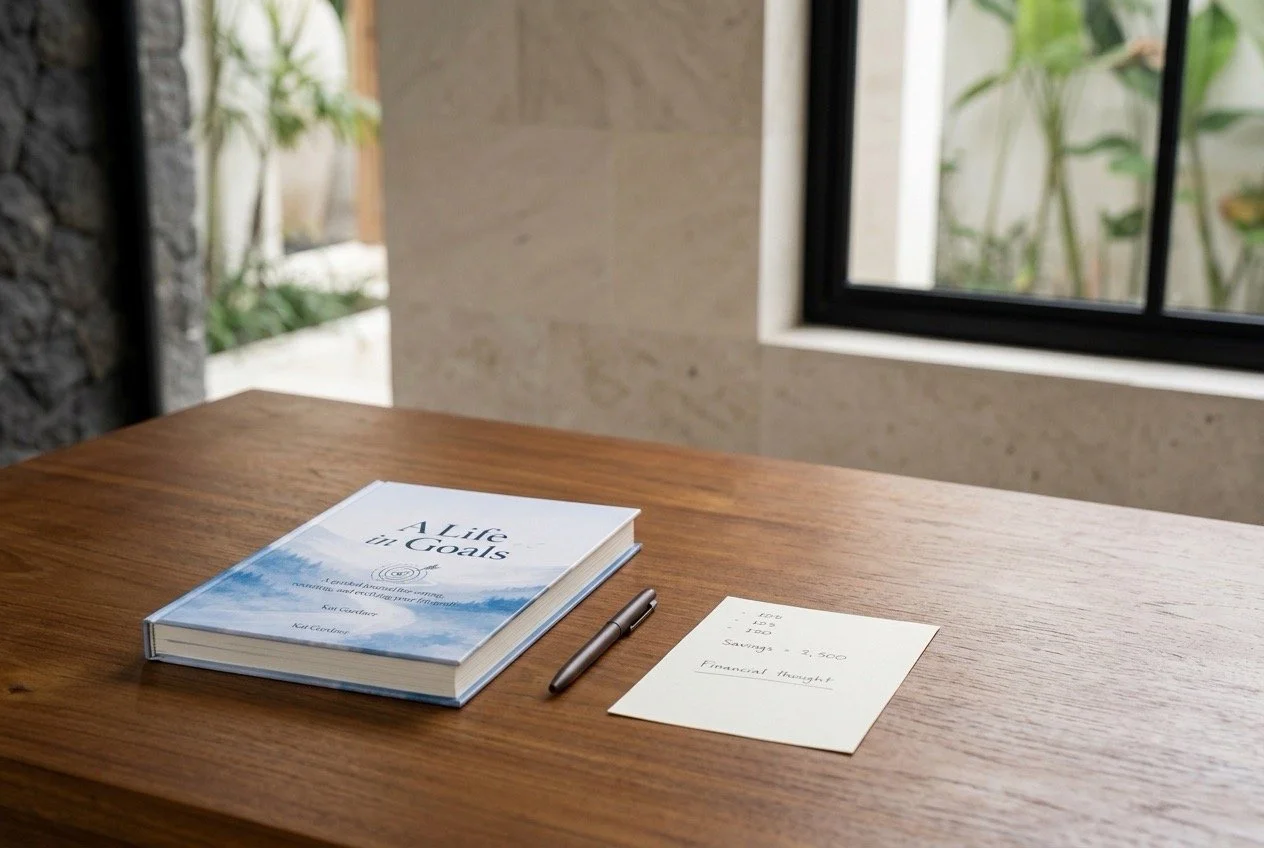
Money is another area where the visible goal can easily take over. We choose a number because numbers are easy to recognise: save this amount, pay this off, reach that balance. Those goals can be extremely useful, but what if the more important question is what you want the money to change about the way the year feels? Would you like to worry less when an unexpected bill arrives, book a weekend away without guilt, feel more confident saying no to work that is not right, or simply have a little more choice? The financial goal may still need a number. The reason behind the number is the life you are actually trying to create.
More time is only useful if you know what you want it for
A lot of us say we want more time, but more time is not really the goal. What would you do with it? See friends, travel, read, sleep, exercise, make something, sit outside, cook, go somewhere with your family, or have an afternoon that is not already allocated before it begins? That answer matters because time tends to disappear into whatever is most urgent. If you do not know what you want the room for, the room gets filled. Sometimes the goal is not simply to 'have more time'. It is to protect enough time for something that makes life feel more like yours.
For another perspective on giving your time back to what matters, It’s Okay to Want a Smaller Life explores why a less crowded life can still be a fulfilling one.
Friendship can be a life goal too
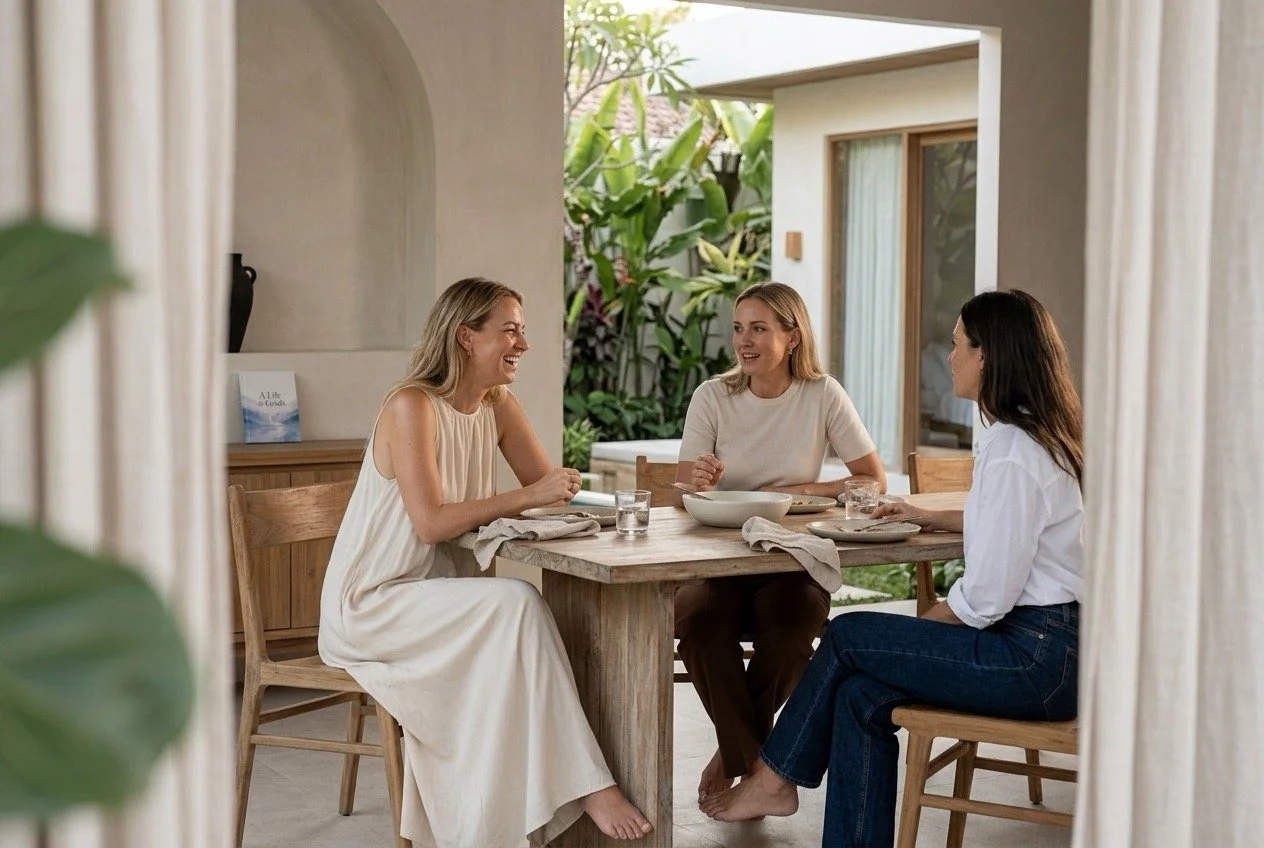
Friendship can quietly slip off a goal list because it does not look like achievement. You may not need a measurable friendship target. You may simply want more dinners, more walks, more messages that turn into actual plans, and more time with the people who make you feel like yourself. If some of your best memories from the last year involved sitting around a table, laughing with somebody, travelling with a friend or having a conversation you did not know you needed, that is information. A better-feeling year may be one where those moments are not left to chance quite so often.
You may want more creativity without needing to become an artist
Creativity can disappear for similar reasons. It is easy to tell yourself that if you are not producing something serious, selling it, exhibiting it or becoming particularly good at it, it does not belong on the list. I do not think that is true. If drawing, photography, ceramics, writing, gardening, cooking, sewing or making things helps you feel more alive, then more room for creativity may be a perfectly good goal. You do not have to justify it with productivity. The point may simply be that a creative hour feels better than another hour spent scrolling, working or doing something you do not care about.
Travel can be about how you want the year to feel
Travel is often written down as a destination: Italy, Japan, a road trip, a weekend away, somewhere you have wanted to go for years. But the destination is only part of it. What do you want the trip to give the year? Anticipation, adventure, rest, time together, a break from routine, or the feeling that the year contained something memorable? That is why even a small trip can change the feeling of a year. It gives you something to look forward to before it happens, something different while you are there and something to remember afterwards.
A better-feeling year might actually contain less
This is the part that can be hardest to recognise because we tend to think improvement means adding: another goal, another habit, another project, another commitment, another thing to optimise. But what if next year feels better because there is less? Less rushing, less overcommitting, less work following you into the evening, less financial anxiety, less comparison, less pressure to make every spare hour useful. Sometimes what creates more life is removing something that has been taking too much of it.
The way different goals support one another is explored in What Is a Goal Ecosystem? And Why Your Goals Don’t Exist in Isolation.
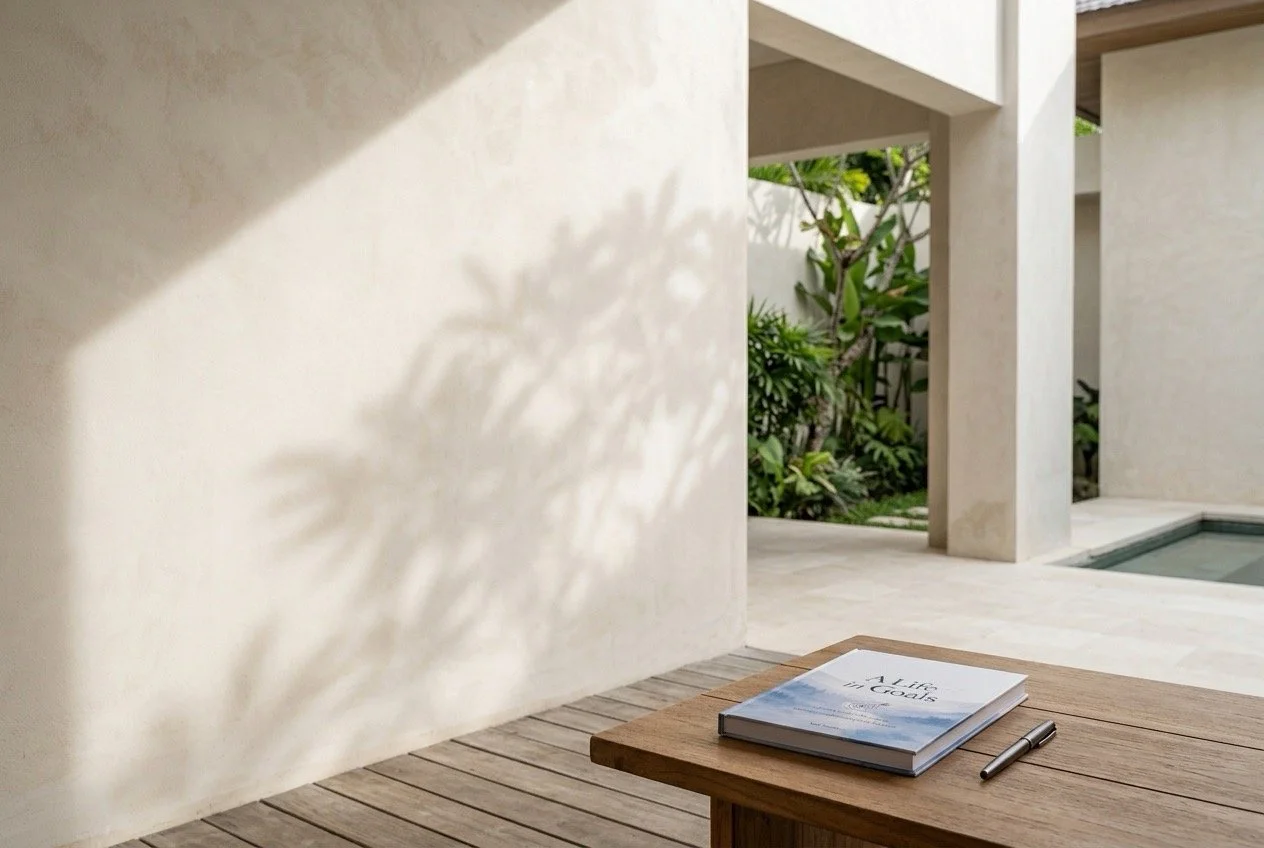
Ask how you want an ordinary Tuesday to feel
I think this is one of the best ways to test a goal. Forget the highlight reel for a moment and imagine an ordinary Tuesday next year. You are not on holiday, nobody has achieved anything dramatic, and it is just a normal day. How would you like that day to feel? Less frantic, more financially secure, more connected, more physically comfortable, more interesting, less dominated by work, or simply more likely to contain something you actually enjoy? Your answer may tell you more about the goals worth choosing than a list of impressive outcomes ever could.
The best goals can change the background of your life
Some goals are obvious milestones and you know when you reach them. Others work in the background: a little more savings, a little more strength, a little more time, better boundaries, more regular contact with people you care about, a creative practice that quietly returns, a trip in the diary, a home that is easier to live in. You may not have one dramatic moment where you think, there, I achieved it. Instead, the year simply feels different. That counts.
Try asking 'feel better' before 'look better'
If you are thinking about goals for the year ahead, you do not need to reject the visible ones. Want the promotion if you want the promotion. Save the money. Take the trip. Change the house. Work towards the thing. But beside each one, ask another question: how do I hope this makes my life feel? If the answer is not particularly clear, ask whether there is another goal underneath it. Maybe the promotion is really about financial security or interesting work. Maybe the home goal is about calm. Maybe the fitness goal is about strength and freedom. Maybe the travel goal is about connection or adventure. Maybe the money goal is about choice. The visible goal can stay. Just make sure the life underneath it still belongs to you.
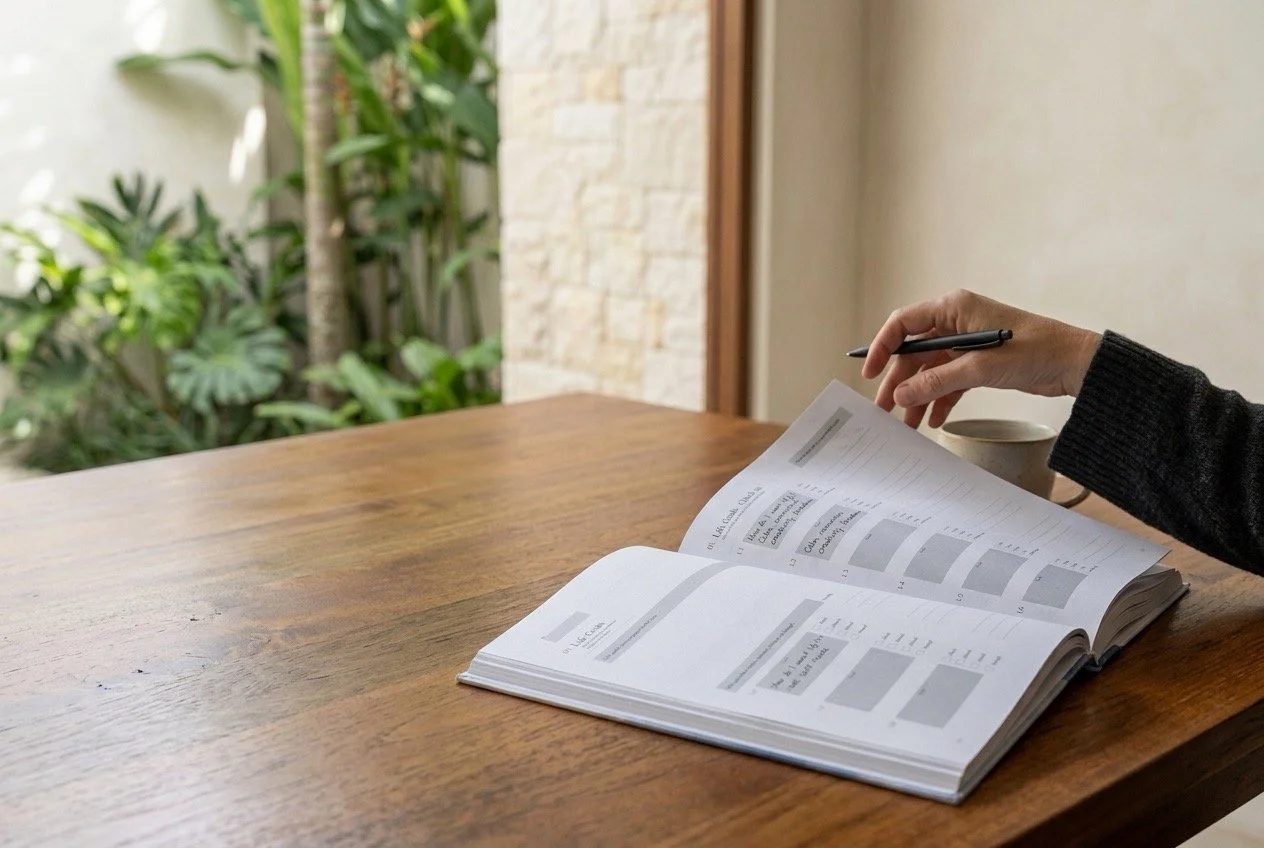
If you would like to explore how these ideas fit into the journal, How to Use A Life in Goals explains how to begin and revisit your goals without treating them as another annual checklist.
Next year does not need to look extraordinary
It can look quite ordinary from the outside. You may go to work, pay bills, cook dinner, take children where they need to go, clean the house, answer messages and do all the usual things. But perhaps there is a little less rushing, a little more money sitting there when you need it, a few more dinners with people you love, a trip in the calendar, a creative thing you keep returning to, a body that feels stronger and a little more room around your own thoughts. That may not look like the most impressive year. It may simply feel like a much better one.
If this has made you think differently about the year you want to live, A Life in Goals is a guided journal for exploring the goals, dreams and everyday choices that matter to you, without fitting everything into one year. Explore A Life in Goals on Amazon.
Kat x
Creator of A Life in Goals