A reflection on the difference between a life that is full of activity and one that is actually making room for the things that matter to you.
It is very easy to finish a week completely exhausted and still have the strange feeling that nothing you really wanted moved forward.
You answered the emails. You went to work. You made the appointments. You paid the bills. You bought the groceries. You organised something for somebody else. You cleaned up. You replied to messages. You solved the small problem that appeared at 3.15 on Wednesday afternoon.
You were not doing nothing.
You were extremely busy.
But busy and moving towards something you want are not always the same thing.
That distinction matters because activity can create a very convincing feeling of progress. A full diary looks productive. A long list of completed tasks looks responsible. And often it is. Much of ordinary life genuinely needs doing.
The problem is not that we have admin, responsibilities or periods where life is simply full.
The problem is when the urgent things become so good at filling the space that the important-but-not-urgent things disappear completely.

Busy can be necessary
I do not think the answer is to make busyness the enemy.
There are seasons where you simply have a lot to carry.
Work can be intense. Children need more of you. A parent needs help. A move happens. Money needs attention. Someone gets sick. A project has a deadline. You may genuinely have very little spare capacity.
In those periods, keeping life functioning can be enough.
You do not need to add a meaningful personal goal on top just to prove that you are still moving forward.
A Life Goal can rest. A Dream Goal can stay on the page. An Everyday Goal might be nothing more ambitious than getting enough sleep or keeping one evening free.
The useful distinction is not busy versus good.
It is whether the busyness belongs to a season you understand, or whether it has quietly become the permanent structure of your life.
If you are questioning whether a fuller schedule is really the life you want, It’s Okay to Want a Smaller Life explores why a quieter direction can be a meaningful goal.
The urgent things are very good at looking important
Urgent things come with noise.
They have deadlines, notifications, people waiting, consequences and visible boxes to tick.
The things you genuinely want often arrive much more quietly.
I would love to travel more. I want to get stronger. I miss drawing. I want to understand my money better. I would like more time with friends. I want to work differently one day. I keep thinking about that course. I would love one afternoon a week that is mine.
None of those ideas usually sends you a reminder at 9.00am.
They can wait.
And because they can wait, they often do.
That does not mean they are less important. It means they are less urgent.

A full day can still take you nowhere you chose
This is where productivity can become slightly misleading.
You can become extraordinarily efficient at completing things that keep the current version of life running exactly as it is.
Faster email. Better systems. A cleaner calendar. More organised errands.
All of that can be helpful.
But efficiency only tells you how well you are doing something. It does not tell you whether the thing deserves as much of your life as it currently receives.
Sometimes the more useful question is not, 'How can I get more done?'
It is, 'What do I actually want all this activity to make room for?'
Moving towards something does not have to look dramatic
The opposite of busyness is not a huge life overhaul.
Moving towards something you want can be almost invisible.
Transferring a small amount into a travel account. Taking a half-hour walk because strength matters to you. Booking lunch with a friend you keep saying you miss. Reading about the course. Spending forty minutes drawing. Saying no to one commitment so an evening stays free.
Those things may look smaller than the work, errands and responsibilities surrounding them.
But they have a different quality.
They were chosen because they connect to something you want.
That is movement.
For a closer look at how those small, intentional choices fit into your bigger picture, see What Is a Goal Ecosystem? And Why Your Goals Don’t Exist in Isolation.

Not everything you do needs to connect to a goal
I also do not think every task needs a grand purpose.
That would be exhausting in a completely different way.
You are allowed to wash the clothes because the clothes need washing. You can watch television because you are tired. You can spend an afternoon doing nothing useful at all.
The point is not to turn ordinary life into a chain of optimised actions leading towards an approved future.
The point is simply to notice whether the things you say matter to you ever receive any space.
If they do, even imperfectly, that may be enough.
If they never do, the answer may not be to work harder.
It may be to look at what keeps filling the space first.
Ask what the busyness is in service of
Some busyness makes complete sense when you know what it is supporting.
Working hard for a period because you are building financial security can feel different from working endlessly because you no longer know how to stop.
A demanding few months on a project you genuinely care about can feel different from constant urgency that has become normal.
Saving, planning, organising and researching can all be meaningful when they are in service of something you have chosen.
The activity is not the problem.
The question is whether you can still see what it is for.
A useful check-in: what moved?
At the end of a busy week, instead of asking only what you got done, you could ask one different question.
What moved?
Not what did I complete.
What moved closer to the life I actually want?
Perhaps nothing did. Some weeks are like that.
Perhaps the answer is tiny.
I protected one morning. I transferred the money. I went to the appointment I had been putting off. I called my friend. I did the first lesson. I wrote the idea down instead of letting it disappear again.
That kind of progress can be easy to miss because it does not always look impressive.
But if it connects to something that matters to you, it counts.

Sometimes the real goal is to create room
There are times when the next useful goal is not to add something at all.
It is to make space.
Work one evening less. Leave one weekend unplanned. Stop volunteering for something you no longer want to do. Simplify a routine. Ask for help. Pay for the thing that genuinely gives you time back if you can afford it.
Creating room can look unproductive because the result is empty space.
But empty space is often where the things you keep saying you want finally have somewhere to go.
More is not always the route to movement.
Sometimes less is.
You may not need more discipline. You may need more connection.
When people feel they are not making progress, the usual advice is more discipline.
Better habits. Better routines. Better time management.
Sometimes that helps.
But sometimes the problem is not that you are bad at getting things done.
You may be very good at getting things done.
The problem may be that you have lost sight of which things are yours.
That is why writing down what you want can be useful even when you are too busy to act on much of it.
The page reminds you that the urgent list is not the whole story.
It gives the quieter things somewhere to remain visible.
Why Writing Down Your Goals Matters explores how putting those thoughts on paper can help you recognise what keeps returning, even before you are ready to act.
The aim is not constant progress
I would not want a life where every week had to demonstrate measurable movement.
That would simply turn goals into another form of pressure.
There are weeks for progress and weeks for maintenance. Weeks where something moves quickly and weeks where it sits exactly where it was.
A meaningful life is not built by optimising every seven-day period.
The value of having goals is not that they force you to make progress all the time.
It is that they help you remember what you would like your life to contain when there is finally some room to choose.
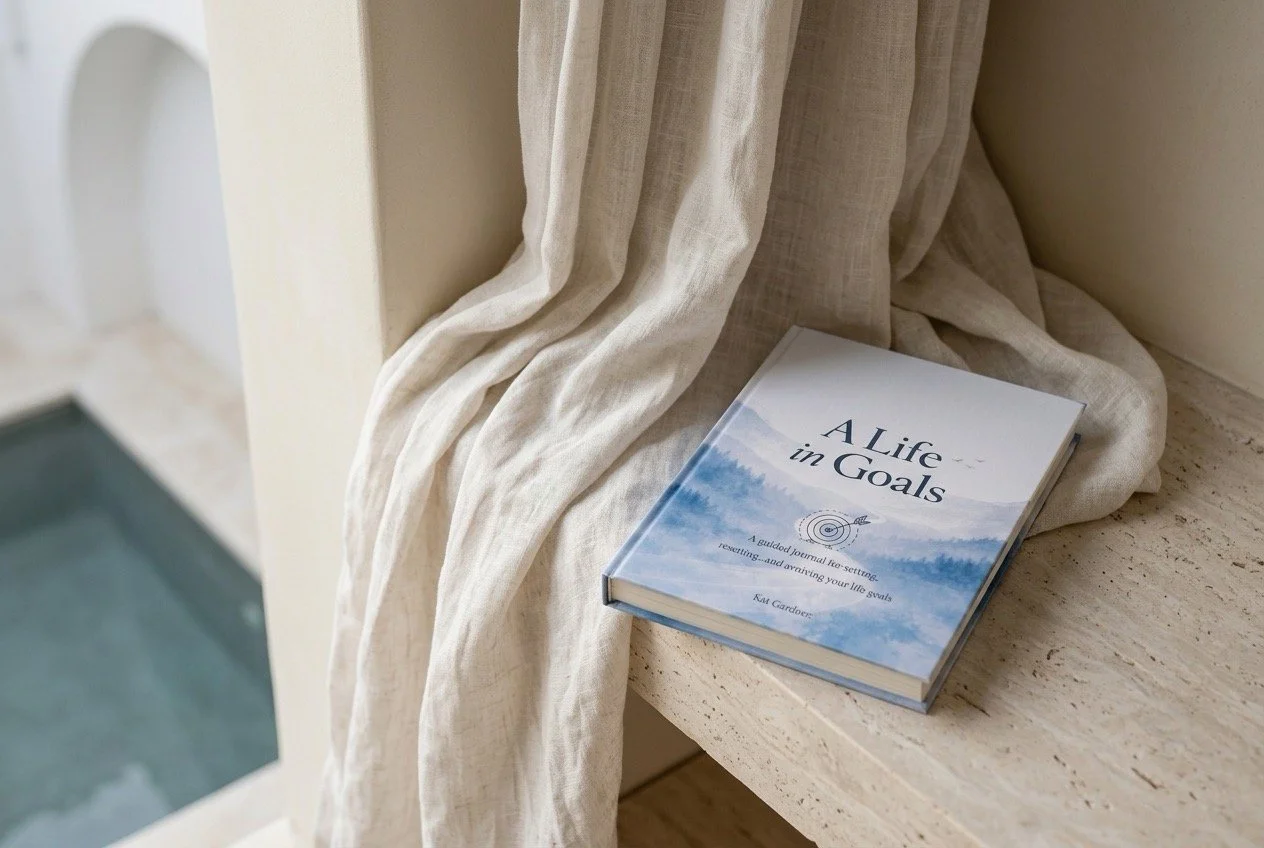
If you are ready to give those wants somewhere to sit without adding another deadline, How to Use A Life in Goals explains how to explore and revisit goals at your own pace.
Being busy tells you what filled the time. Your goals can remind you what you wanted the time to be for.
There will always be things that need doing.
Some will be important. Some will be tedious. Some will be for people you love. Some will simply be part of being an adult.
You do not need to eliminate those things to live intentionally.
But every now and then, it is worth asking whether anything you genuinely want is still getting a turn.
Not every day.
Not perfectly.
Just often enough that your own life does not disappear underneath everything required to keep it running.
Being busy tells you what filled the time.
Moving towards something you want tells you that, somewhere inside all of that activity, you still remembered what the time was for.
If you would like somewhere to keep those quieter goals visible while ordinary life carries on, A Life in Goals is a guided journal designed to help you explore, revisit and evolve what matters to you. Explore A Life in Goals on Amazon.
Kat x
Creator of A Life in Goals