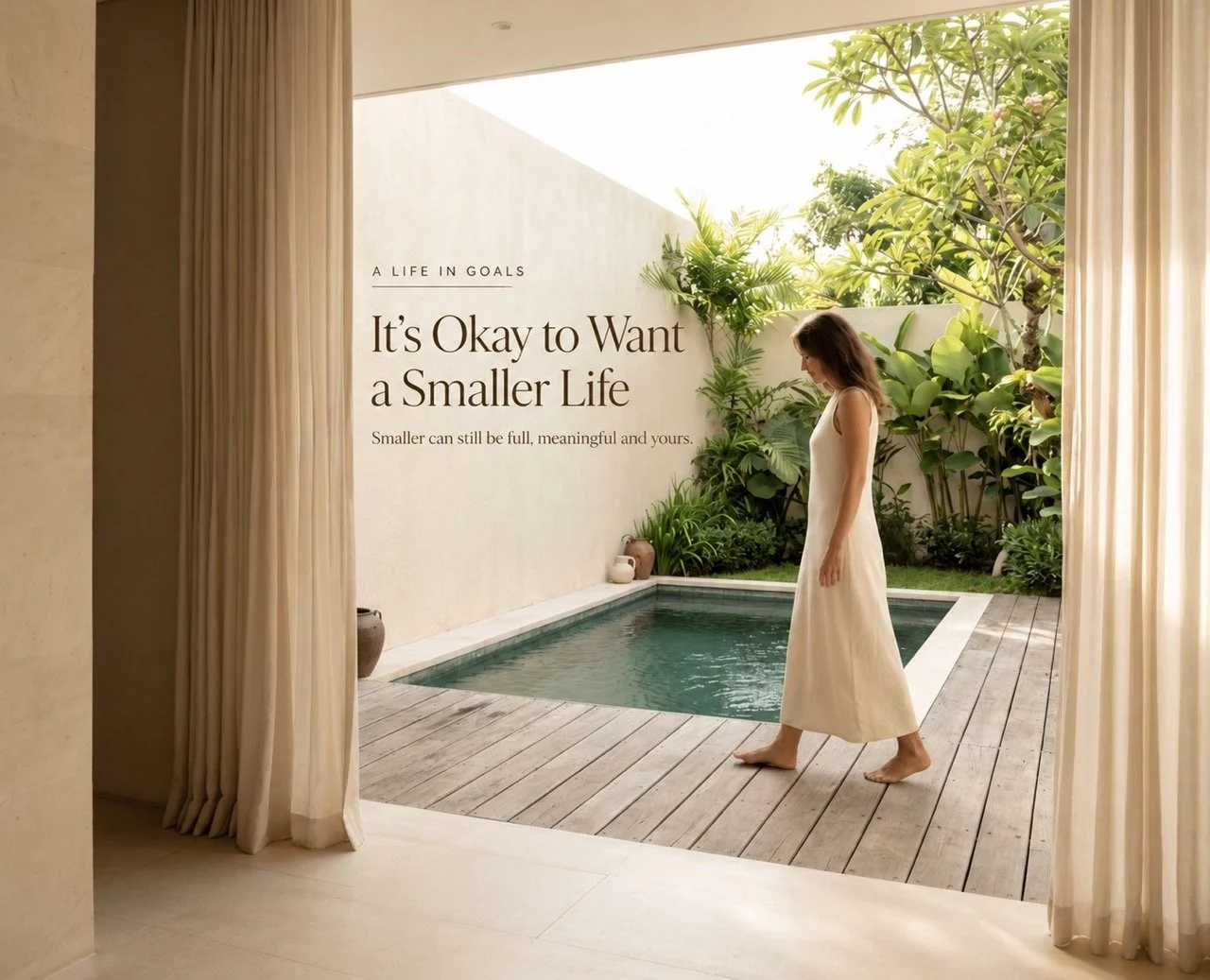
It’s Okay to Want a Smaller Life
There is a version of goal setting that always seems to point in one direction: more. Earn more, achieve more, travel more, build something bigger, buy the bigger house, get the promotion, grow the business, fit more experiences into the year and become more productive so you can somehow make room for even more. Sometimes that is exactly what we want. There are stages in life when ambition feels exciting and we genuinely want the challenge, the adventure, the bigger opportunity or the next thing to work towards. There is absolutely nothing wrong with wanting to build a big life, but I also think it’s okay to reach a point where what you want isn’t bigger at all.
Maybe what you want now is less rushing, fewer commitments, a home that’s easier to look after, work that takes up less space in your head, more evenings when there’s nowhere you need to be and fewer things competing for your attention. Maybe you want more time with the people you actually want to spend it with, more time at home, more time outside or simply more time when nobody needs anything from you. None of those things sound particularly impressive when written on a conventional list of goals, but perhaps that’s part of the problem. We’ve become so used to thinking of progress as adding something that we can overlook the possibility that taking something away might improve our lives just as much.
A smaller life doesn’t necessarily mean wanting less from life. Sometimes it means becoming much clearer about what you want more of.
When less is actually the goal
It’s interesting how easily we recognise expansion as a goal. If someone says they want to grow their business, buy another property, earn twice as much or take on a bigger role, we understand immediately. They’re ambitious. They’re progressing. They’re moving forward. But what if someone’s goal is to work four days instead of five? What if they want to downsize their home because they don’t want to spend so much time and money maintaining it? What if they don’t want the promotion because they know exactly what it will cost them in time and energy? What if they’ve spent decades building a career and their next goal is to make work take up less of their life rather than more?
Those are goals too, but they don’t always look like progress from the outside. I think that’s one of the reasons it can be surprisingly difficult to admit that we want something smaller. We’re so accustomed to measuring success through accumulation that choosing less can feel as though we’re going backwards. There is almost an expectation that if we’re capable of doing more, earning more or achieving more, then naturally we should want to. Deciding that you have enough, or that the next step upwards isn’t actually a step you want to take, can feel strangely rebellious.
But less of one thing can create room for much more of something else. Working less might mean more time with your children, your partner or your friends. A smaller home might mean more money for travel or simply fewer weekends spent maintaining things. Fewer commitments could mean deeper friendships because you actually have time to see the people who matter. Buying less might give you greater financial freedom. A quieter career might leave you with enough energy to start painting again, spend time outside, volunteer, learn something new or simply be more present in your own life.
The question isn’t really whether your life looks bigger or smaller. It’s whether it feels better to you.
Sometimes success changes shape
What we want at one stage of life doesn’t have to remain our definition of success forever. There might have been a time when you genuinely wanted the senior role, the bigger house, the constantly full calendar or the feeling of always having something happening. Perhaps you loved being busy. Maybe building something mattered enormously to you and you’re proud of what you created. Wanting something different now doesn’t make that earlier version of you wrong, and it doesn’t mean all the effort you put into getting there was wasted. It simply means you’ve lived some more life since then.
This is something I find increasingly interesting about goals. We can write them as though we’re making permanent declarations about who we are, when really we’re capturing what matters to us at one particular point in time. The goal that felt exciting at 30 might feel exhausting at 50. Something you dismissed as boring when you were younger might now sound wonderful. A quiet weekend at home can become more appealing than a packed social calendar. Time can become more valuable than another possession. Flexibility can become more attractive than status, and the freedom to say no can start to feel more successful than having endless opportunities to say yes to.
Our idea of a good life evolves because we do. That’s not a failure of goal setting. If anything, it’s one of the reasons I think we should keep coming back to our goals rather than blindly following the ones we set years ago. Sometimes it’s worth looking at something you’ve been working towards and asking yourself whether you still genuinely want it, or whether you’re simply continuing because at some point in the past you decided that you should.
There is nothing wrong with changing your definition of success halfway through your life. There is also nothing wrong with changing it several times.
A smaller life can still contain very big things
I don’t think choosing a smaller life means removing adventure, curiosity or ambition from it either. You might want a very quiet everyday life and still want to travel somewhere extraordinary. You might choose to work less and finally have enough time and energy to write the book you’ve been thinking about for years. You might want fewer possessions but be willing to spend much more on experiences. You might stop chasing career progression and decide to become incredibly good at something simply because you love it.
Perhaps you want to live somewhere quieter but travel more. Maybe you want fewer social commitments but deeper friendships. Perhaps you want a smaller home and a much bigger garden. You might want less responsibility at work and more creative ambition outside it. A smaller life doesn’t have to be a tiny life, and it certainly doesn’t need to be an uninteresting one. It can still contain enormous dreams.
The difference may simply be that you’re becoming more selective about what deserves the space.
Instead of continually asking, “How much can I fit in?”, you begin asking, “What is actually worth making room for?”
I think that’s a much more interesting question, particularly as we get older and become increasingly aware that our time isn’t an unlimited resource. There will always be more things we could do, more places we could go, more things we could own and more ways we could improve ourselves. Eventually we have to decide which of them actually deserve a piece of our life.
What would you happily have less of?
When we think about setting goals, we nearly always begin with what we want to add. It can be surprisingly revealing to turn that around and ask what we’d happily have less of instead. Less commuting, financial pressure, clutter, time on your phone, work creeping into evenings, rushing from one thing to another, saying yes because you feel you should, maintaining things you don’t particularly care about or comparing your life to somebody else’s.
You don’t have to immediately turn the answer into an action plan. Just notice what comes to mind. If your immediate answer is “I want less work”, for example, there may be several very different goals underneath it. Perhaps you want enough financial independence to move to a four-day week. Maybe you want to change careers. Perhaps you actually like your work but want better boundaries around it. Maybe you’re tired rather than dissatisfied and what you really need is a proper break.
If you want less clutter, the goal underneath that might be a calmer home rather than a perfectly organised one. If you want fewer commitments, perhaps what you actually want is enough unscheduled time to be spontaneous again. If you want to spend less money, maybe what you’re really looking for is greater freedom from financial pressure rather than a particular savings figure.
“Less” doesn’t always have to be the final destination. Sometimes it simply shows you what you’re trying to make room for.
And then there is the next question: if you had that space, what would you do with it?
Maybe you’d read again. Walk more. Cook. Travel. See friends. Garden. Make something. Sit outside with a cup of tea and do absolutely nothing useful for half an hour. Perhaps you’d finally have enough mental space to think about what you want next.
Or maybe you wouldn’t fill the space at all.
I think that’s allowed too.
We have become very good at treating empty space as a problem that needs solving. A free evening gets another commitment. A spare room gets filled. An hour appears and we pick up our phones. Even rest can become something we’re supposed to optimise, track and perform correctly. Perhaps one of the things a smaller life can give us is simply a little more room that doesn’t immediately need a purpose.
The goals nobody else needs to understand
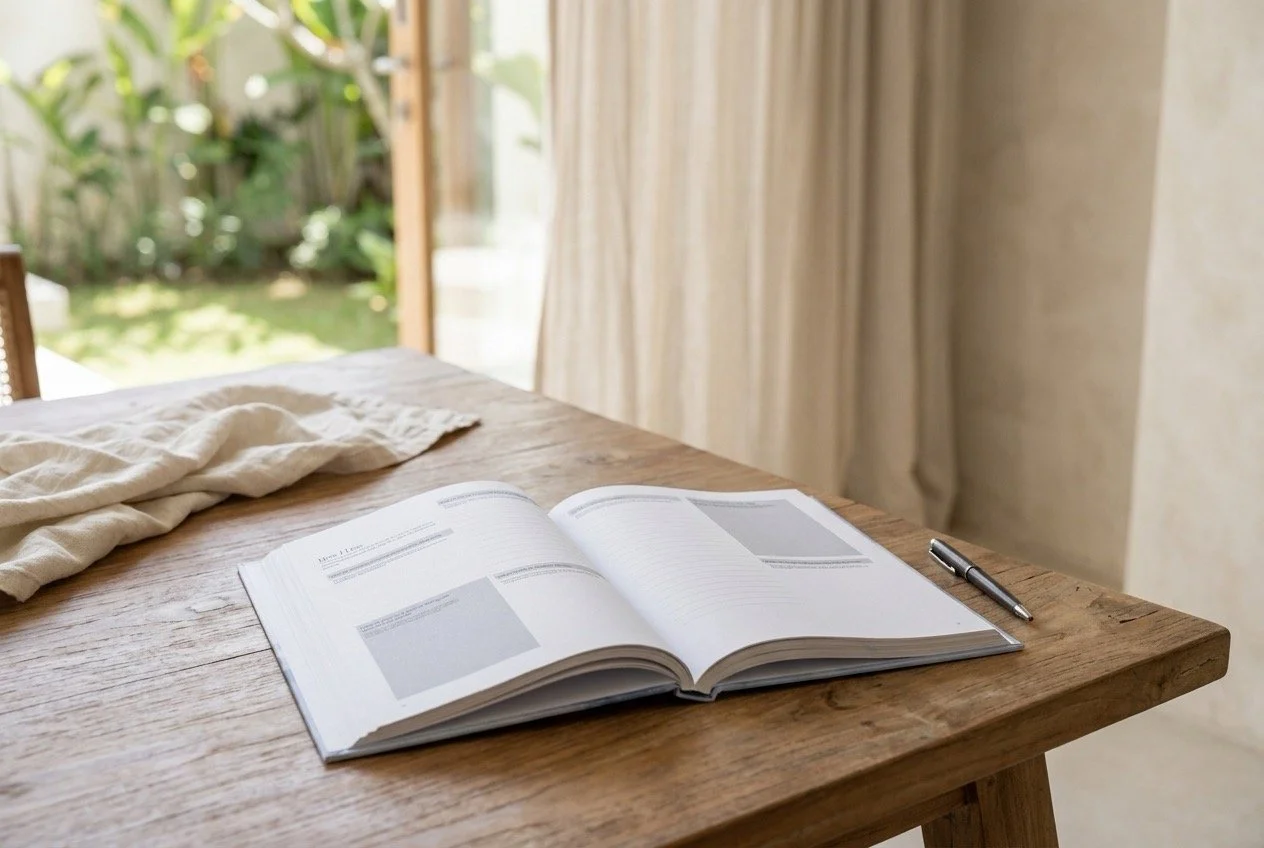
One of the things I wanted A Life in Goals to make room for was the idea that a goal doesn’t have to sound impressive to anybody else. It doesn’t need to make a good announcement, come with a huge number attached to it or make sense to people who want something completely different from you. A goal is personal, and sometimes the things that would most improve our lives are almost invisible from the outside.
Your goal might be to build a company. Someone else’s might be to leave one. You might want to buy the dream house, while somebody who already owns theirs is dreaming about selling it and living somewhere much simpler. You might want to travel constantly, while someone who has spent years travelling might desperately want to stay home, grow tomatoes and know exactly where they’ll be next Saturday.
Neither version is more ambitious or more worthwhile simply because it looks bigger from the outside.
And this is where I think we have to be a little careful about other people’s definitions of success. It is incredibly easy to absorb them without realising. We see what other people are buying, achieving, renovating, earning, building and experiencing, and somewhere along the way we can start adding their goals to our own list. Sometimes it takes consciously stepping away from all of that to realise that what would make us happiest is actually much simpler.
The useful question isn’t, What should I want next?
It’s, What would make this life feel better to me?

Maybe the next goal isn’t more
There are so many stages of life when more makes complete sense. More experience, more confidence, more financial security, more adventure, more opportunities. We need those periods of expansion. They take us places, teach us things and help us build the lives we have.
But there may also come a point when adding more stops improving things.
Perhaps the next chapter isn’t about expansion. Maybe it’s about choosing. Keeping the things that matter and allowing some of the rest to become less important. Protecting your time a little more carefully. Being more deliberate about what gets your attention and accepting that every opportunity doesn’t need to become your opportunity.
Maybe your next goal is to work a little less and travel a little more. Perhaps it’s to stop buying things you don’t really care about and save for something you do. Maybe it’s having fewer people in your life but seeing the ones you love more often. Perhaps it’s a quieter home, a slower weekend or simply not feeling as though you’re constantly running five minutes behind your own life.
None of those things means you’ve stopped wanting things for yourself.
In fact, perhaps the opposite is true.
Sometimes it takes a long time to become confident enough to admit that what you want doesn’t look particularly impressive from the outside.
A life doesn’t have to look enormous to be incredibly full. It can be full of people you love, places you want to see, things you want to learn, work that matters enough, meals around a table, books you actually have time to read, ordinary days you enjoy and enough space to notice that you’re living them.
So if one of your goals is to have less, I think that’s worth writing down.
Less pressure. Less rushing. Less noise. Less obligation. Less maintaining things you no longer care about.
Not because you’re giving up on having a big life.
But because sometimes wanting a smaller life is really about making more room for the parts of it you don’t want to miss.