There is something very satisfying about finishing things. We like ticking boxes, reaching the end of a list and closing a book knowing we’ve completed every page. Most journals and planners encourage that feeling too. You begin at the front, work your way through, and eventually arrive at the end.
A Life in Goals isn’t really designed to work that way.
In fact, if you open your copy a year from now and there are still blank pages, unfinished sections and questions you haven’t answered, I don’t think that means you’ve used it badly at all. There may be pages you aren’t ready for yet, goals you haven’t thought of and parts of your life that simply don’t need your attention right now. You might fill ten pages in one afternoon and then not touch the book for three months. You may return after a holiday, a birthday, a change at work or a conversation that suddenly makes you think differently about what you want.
That’s part of what I wanted the book to allow.
Your life isn’t something you complete in order, so your goal journal doesn’t need to be either.
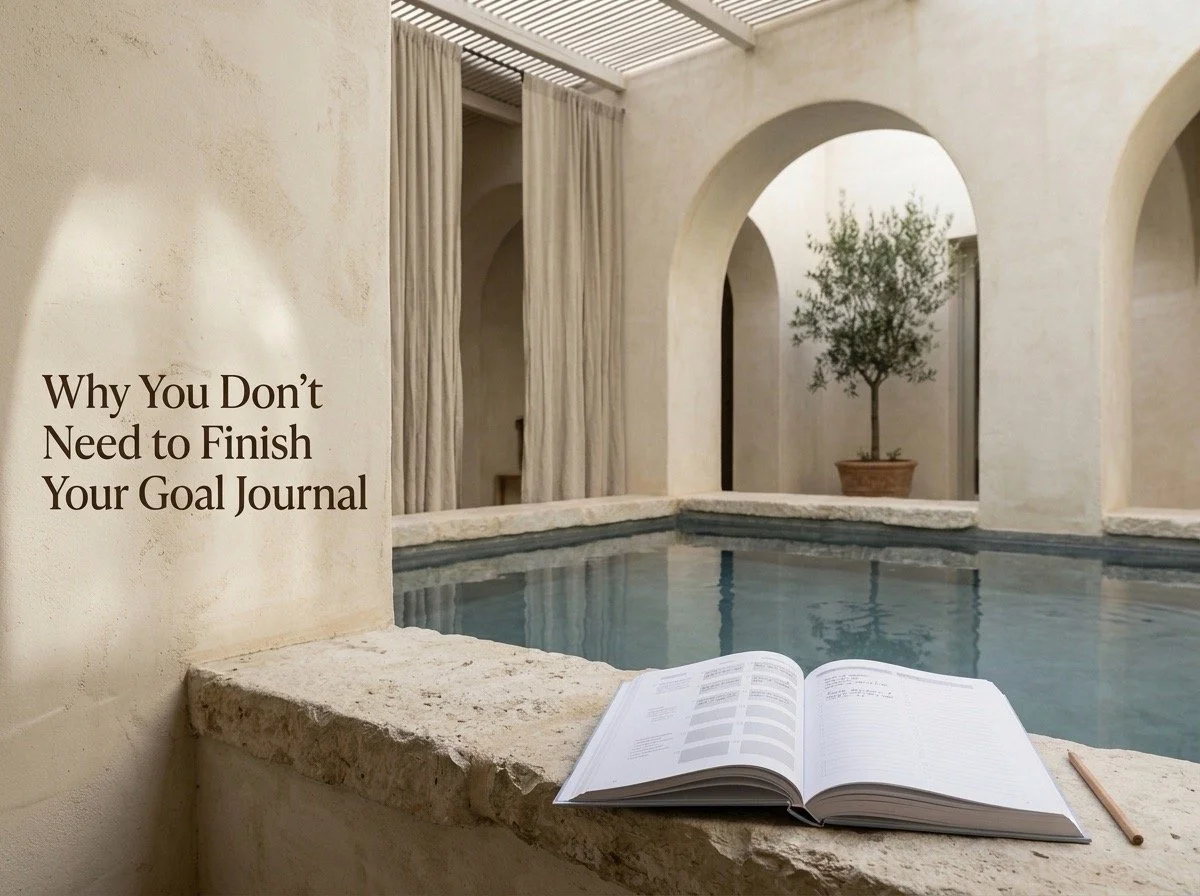
A blank page isn’t something you’ve failed to fill
I think blank pages can make us strangely uncomfortable. If we’ve bought a beautiful journal, there’s almost an expectation that we should use every part of it properly. We can start feeling as though leaving a section empty means we haven’t thought deeply enough or haven’t got enough goals.
But perhaps you genuinely don’t have anything to write there yet.
Maybe travel isn’t particularly important to you right now. Perhaps your career is going well and you don’t feel any need to change it. You might open a page about something you’ve simply never considered before and have absolutely no idea what you want.
Leave it blank.
Six months from now, something might happen that makes that page suddenly relevant. You meet someone who’s just returned from somewhere extraordinary and think, I’d love to go there. Your work changes. Your children get older. Your finances shift. You discover something you’d love to learn or experience.
The blank page was simply waiting for the right thought.
I actually like that idea. An unfinished journal leaves room for things you haven’t imagined yet.
You don’t have to use the book in order
We are taught from such an early age to start at the beginning of a book that skipping around can somehow feel wrong.
With A Life in Goals, I’d encourage it.
Flick through.
If a page about travel immediately makes you think of five places you’d love to go, start there. If you’ve been worrying about money, perhaps the financial section is where your attention naturally goes. If work is taking up far too much space in your head, begin with that. If something around creativity, home, relationships or experiences makes you stop, follow the thought.
You don’t need to complete one section before you’re allowed to move to another.
And you don’t need to answer every question simply because it’s on the page.
The book is there to help you think, not to test whether you’ve thought about everything.
If you want a broader guide to using the journal this way, read How to Use A Life in Goals.
Sometimes one question will lead to another area of your life completely. That’s fine too. Real thoughts rarely arrive in neat categories.
Some goals aren’t ready to be written yet
There are things you don’t know you want because you haven’t experienced the thing that will make you want them.
That’s quite an exciting thought.
Ten years ago, there may have been goals you couldn’t possibly have written because you hadn’t met the person, visited the place, discovered the interest or had the experience that would eventually create them.
The same is true today.
There are future goals you don’t know about yet.
That’s one of the reasons I’ve never loved the idea of sitting down and creating a definitive plan for your entire life. We can think about what we want from where we are now, but we can’t know everything that’s coming.
A goal journal should leave space for surprise.
Perhaps you discover a new interest at 55 that becomes a huge part of the next twenty years of your life. Maybe somebody introduces you to a place you’d never considered visiting. You could stumble into an opportunity you couldn’t possibly have planned.
You don’t need to fill the empty space before life has had a chance to give you something to put there.

Coming back is more important than finishing
I think the more interesting question isn’t “Have I finished my goal journal?”
It’s “Have I come back to it?”
When you return to something you wrote months or years ago, you get information you couldn’t have had when you first wrote it.
Does the goal still matter?
Has anything happened?
Did you start?
Did you forget about it completely?
Do you want it more now?
Do you read it and wonder why on earth you ever wanted it in the first place?
That’s useful.
Sometimes revisiting an old goal gives you the little push you need to finally do something about it. At other times, it gives you permission to let it go.
You might also discover that something has quietly happened without you really acknowledging it. A financial position improved. You took the trip. You learned the thing. Your work changed. You created the home you once imagined.
If you’re only interested in reaching the final page, you miss that part.
The real value can be in the conversation between what you wrote then and what you know now.
Your handwriting should change
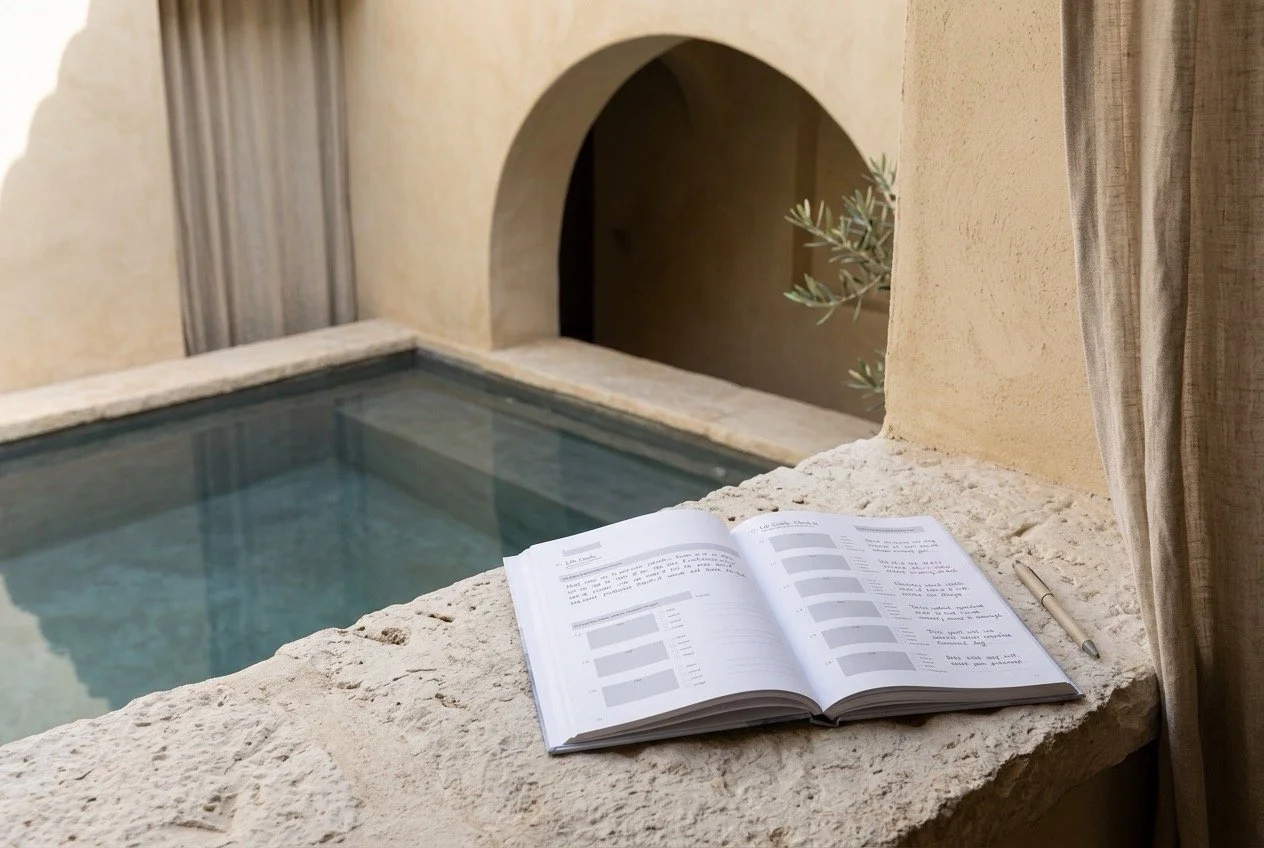
I actually hope an A Life in Goals journal looks different as the years pass.
Different pens.
Different handwriting.
Crossed-out words.
Notes added in margins.
Dates.
Things circled.
A goal written neatly one year with something scribbled beside it two years later.
Maybe even a little coffee mark somewhere.
I don’t want it to feel like a pristine workbook you’re afraid to spoil.
I still have the tiny notebook where I wrote my own goals in my twenties, and there is absolutely nothing pristine about it. Goals sit beside calculations. Things are crossed out. Pages are messy. My handwriting changes. Some of it barely makes sense to me now.
But that’s exactly why I treasure it.
I wrote more about what those old pages taught me in What Happened to the Goals I Wrote Down in My 20s?
It looks like something that came along for part of my life.
A keepsake doesn’t become valuable because you kept it perfect. It becomes valuable because of what happened to it while you were using it.
You are allowed to outgrow what you wrote
One of the risks of treating a goal journal as something to complete is that it can start feeling like a list of obligations.
You wrote it down, therefore you’re supposed to do it.
I don’t believe that.
The person who writes a goal today doesn’t get to dictate what the person reading it five years from now must want.
You are allowed to change.
If you wrote that you wanted a particular career and later realise you don’t, cross it out.
If you wanted to move somewhere and now can’t imagine leaving home, write that.
If the huge goal has evolved into a smaller one, change it.
If something you once thought mattered now seems completely irrelevant, let it go.
That isn’t evidence that the journal failed.
It’s evidence that it worked.
If you are trying to work out whether a goal still genuinely belongs to you, How to Set Personal Goals That Actually Feel Like Yours goes deeper into that question.
You captured what mattered to you then, and now you have somewhere to record what matters to you instead.
There is no deadline for knowing what you want
I think this is especially important when we’re using a journal about life goals.
You don’t need to sit down at 30, 40, 50 or 60 and suddenly know what you want from the rest of your life.
There may be stages when you have lots of ideas and others when you don’t.
There might be a year when one enormous goal takes all your attention and another when you’re perfectly happy maintaining the life you already have.
Sometimes life itself is demanding enough and there isn’t much room for imagining what comes next.
That’s okay.
Your journal can wait.
It isn’t going anywhere.
And when you are ready to think again, the pages are still there.
A journal can become more valuable because you came back to it
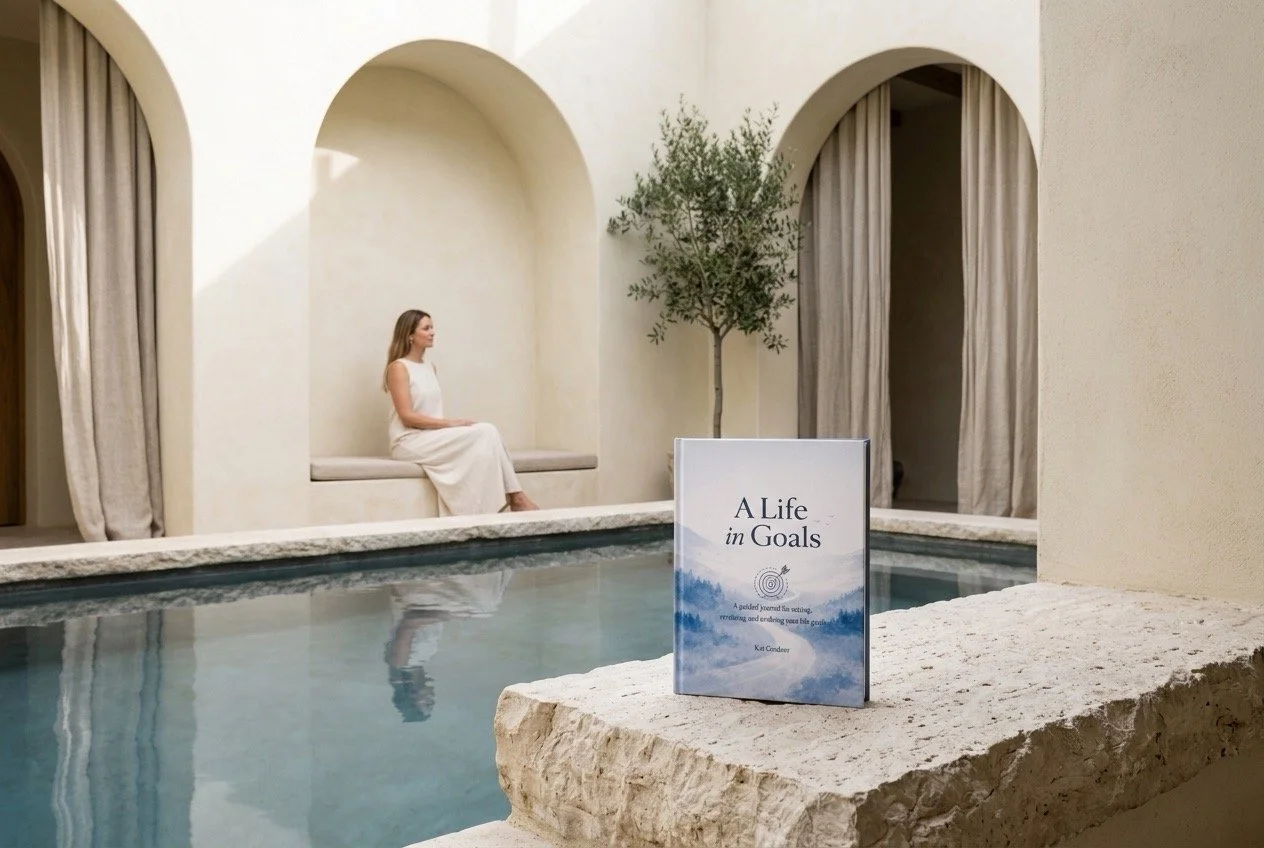
This is exactly how I wanted A Life in Goals to be used. Not as a workbook you race through once, but as a journal you can leave, return to, change, cross out, add to and keep as your life moves.
The blank pages are part of that. So are the messy ones. The value is not in completing every section. It is in having somewhere to keep the thoughts that mattered at different points in your life.
If you want a guided journal designed to be revisited rather than finished, you can explore A Life in Goals on Amazon.
Explore A Life in Goals on Amazon
Maybe finishing isn’t the point
If you eventually reach the final page of A Life in Goals, wonderful.
But I hope that isn’t the moment you decide the book has done its job.
Go back.
Look at what you wrote at the beginning.
Notice what’s changed.
Add a date beside something that happened.
Write a note about something that didn’t.
See whether the things you wanted still sound like you.
Perhaps by then the earlier pages will be more interesting than the blank ones ever were.
That’s what I love about the idea of a goal journal that becomes a keepsake. Its value doesn’t necessarily come from how much you’ve filled in. It comes from the amount of life that has happened around the words.
So please don’t feel pressure to finish your goal journal.
Don’t rush through pages because they’re there.
Don’t invent goals to fill spaces.
Don’t keep pursuing something simply because you once wrote it down.
Use the book when you have something to say.
Come back when life changes.
Leave room for the things you haven’t thought of yet.
And let it become a little messy along the way.
Because the goal was never to finish the book.
The goal is to keep having somewhere to think about the life you’re still living.
Kat x
Creator of A Life in Goals