A gentler way to think about the year ahead for people who want direction without a dated planner, daily tracking or a rigid twelve-month system.
I have never thought that planning your life and using a planner had to be the same thing.
A traditional planner can be wonderful if you love dates, appointments, lists, routines, weekly spreads and the satisfying feeling of seeing the year laid out in front of you. Some people genuinely enjoy that structure.
But there are also plenty of us who buy a beautiful planner in January, use it enthusiastically for a few weeks, miss a stretch of days and then feel as though we have somehow fallen behind in our own book.
That is the part I have never liked.
Life does not unfold neatly from Monday to Sunday. Some weeks are full. Some are strange. A goal you thought would matter in January can be irrelevant by June. A new idea can arrive in August. Something you thought would take three months can take three years. A month can disappear because somebody is sick, work explodes, money changes or you simply have other things to deal with.
So if you want to think about the year ahead but do not want a traditional planner, you are not missing the point.
You can plan a year without planning every day of it.

A planner organises time. A life journal can help you think about direction.
That distinction is probably the simplest way I can explain it.
A planner is usually built around time. Days, weeks, months, appointments, tasks and deadlines. Its job is to help you organise what is happening and when.
A life-goals journal has a different job. It can help you think about what you want the year, and your life more broadly, to contain. What matters now? What has been neglected? What are you curious about? What do you want to protect? What would you love to do one day? What deserves attention this year and what can comfortably wait?
Those questions do not need a box for every Tuesday.
In fact, they are often easier to answer when you are not immediately turning them into a schedule.
Start with direction, not dates
If I were planning a year without a traditional planner, I would begin by stepping back from the calendar altogether.
I would ask what I want the year to contain.
Perhaps I want more travel. More financial breathing room. More time with friends. Better health. More creativity. A course. A change at work. A home project. More time outside. Less rushing. A bigger trip in the next few years that needs some preparation.
At this stage, I would not worry about turning every answer into a goal.
I would just notice the direction.
That is important because dates can make us behave as though everything has equal urgency. Direction lets you see that some things are for now, some are for later and some are simply worth keeping in sight.
If you want to go further with that longer-term way of thinking, read Long-Term Goals: How to Think Beyond the Next 12 Months.

Think about the year in layers, not twelve equal months
One of the limitations of a yearly planner is that it can make January and November look as though they belong to the same version of you.
They usually do not.
You may know now that the first part of the year will be busy with work. You may have a trip later. A course may not start until winter. You may want to deal with money first and leave a creative project until life feels less crowded.
That is not poor planning. That is realistic planning.
Instead of assigning every goal to a month, think in loose layers.
What needs attention now?
What is likely to matter later?
What do I want to keep visible without doing anything about yet?
You can return to those three questions whenever the year changes shape.
Keep a full life list and a much smaller active list
This is one of the most useful distinctions I know.
Your full list can be generous.
Travel ideas. Things you want to learn. Money goals. Work changes. Home ideas. Health goals. Dreams. Experiences. Things you want to do with your family. Things you want to do alone. Small things that would make ordinary life nicer.
That list can belong to your life.
Your active list is different.
It might contain two or three things.
The goal you are actually moving now. The practical thing that needs a decision. The part of life you want to protect more deliberately.
Traditional planners can make everything feel active because everything has to be put somewhere.
A life journal gives you permission to keep something without scheduling it.
That can be a huge relief.
Not every goal needs to become a project
This is especially true for dreams.
You may want to spend a month in Italy one day. Learn a language. Write something. Change careers. Start your own business. Buy a different home. Take a long trip. Study something for no practical reason.
If you put every one of those things into a yearly planner, the natural next question is: what is the action step?
But sometimes there is no useful action step yet.
Sometimes the value is in keeping the possibility visible.
A dream can sit in the background for years and still matter. It can become more specific later, or change completely, or eventually become a Life Goal when the timing is right.
Planning your year does not have to mean forcing every dream into this year.
Use the calendar only where the calendar is actually useful
None of this means dates are bad.
Dates are extremely useful when something genuinely depends on one.
A trip needs to be booked. A course has an enrolment date. A debt goal may benefit from a monthly transfer. A health appointment belongs in the calendar. A work application has a closing date.
Put those things in your calendar.
The difference is that the calendar serves the goal rather than becoming the goal-setting system.
You are not trying to squeeze your entire life into twelve monthly boxes.
You are simply giving a date to the parts that actually need one.
Plan the ordinary life around the bigger goal
Big goals are often easier to imagine than the ordinary life that has to support them.
You may want to travel more, but the real work could be financial breathing room, annual leave, health or simply making travel a priority when dates are discussed.
You may want more creativity, but what you need is one regular pocket of time that does not disappear into errands.
You may want a career change, but the first useful stage might be information rather than action.
You may want to feel stronger, but the goal that changes the year could be finding a form of movement you are actually willing to keep doing.
This is where the different kinds of goals in A Life in Goals can be useful. A Dream Goal might hold the possibility. A Life Goal might hold the larger direction. A Growth Goal can help you learn or become more capable. An Anchor Goal can protect what keeps you steady. An Everyday Goal can make the ordinary week support the life you are trying to build.
They are not five steps and you do not need one of each.
For a clearer explanation of each category, see The 5 Types of Goals in A Life in Goals - And Why You Need More Than One Kind.
They simply help you see that one big desire can be connected to several smaller parts of life, and that not all of those parts need to be active at once.
Instead of weekly planning, try occasional check-ins
If you do not want a planner, you probably do not want another system that asks you to review your goals every Sunday night either.
You do not need to.
Come back when it would be useful.
At the end of a busy period. Before a holiday. When work changes. When you suddenly have more time. When a goal starts irritating you. When you realise you have not thought about something for months. When an idea becomes more important. When life feels different.
Then ask a few simple questions.
Do I still want this?
Does anything need attention now?
Has the timing changed?
Is there something I want to add?
Is there anything I am ready to leave alone?
The point is not to prove consistency.
The point is to keep the journal connected to your actual life.
Let blank space be part of the plan
Traditional planners can make blank pages feel like failure.
I think blank space can be incredibly useful.
A blank page leaves room for the person you have not become yet.
This is also why Why You Don’t Need to Finish Your Goal Journal matters: blank pages and unfinished sections are not evidence that you have fallen behind.
It leaves room for a goal that does not exist in January. A trip you have not thought of. A change you could not predict. A new friendship. A problem that needs solving. A dream that becomes possible later.
If your year is already completely planned, there is nowhere for any of that to go.
I would rather leave some room.
You can use a planner and a life journal together
This is not an argument against planners.
If you love a calendar, diary or weekly planner, use one.
Put appointments, deadlines, bookings, school dates, work commitments and practical tasks there.
Then keep your larger thinking somewhere that does not expire on 31 December.
That separation can actually make both tools more useful.
The planner handles logistics.
The journal holds direction.
If you already have the journal and want a practical guide to using it this way, go to How to Use A Life in Goals.
One helps you manage the week.
The other helps you remember what you want the weeks to add up to.
A place for direction that does not expire in December
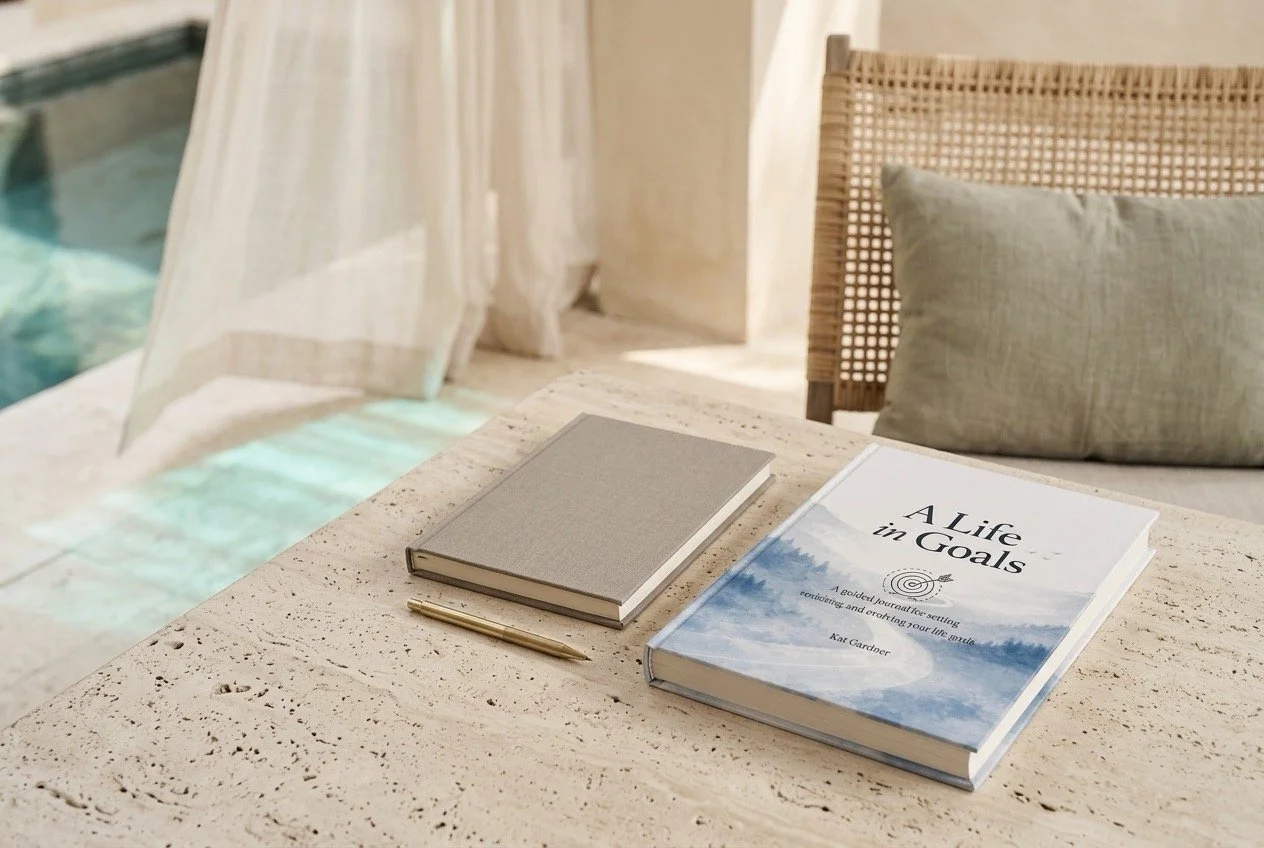
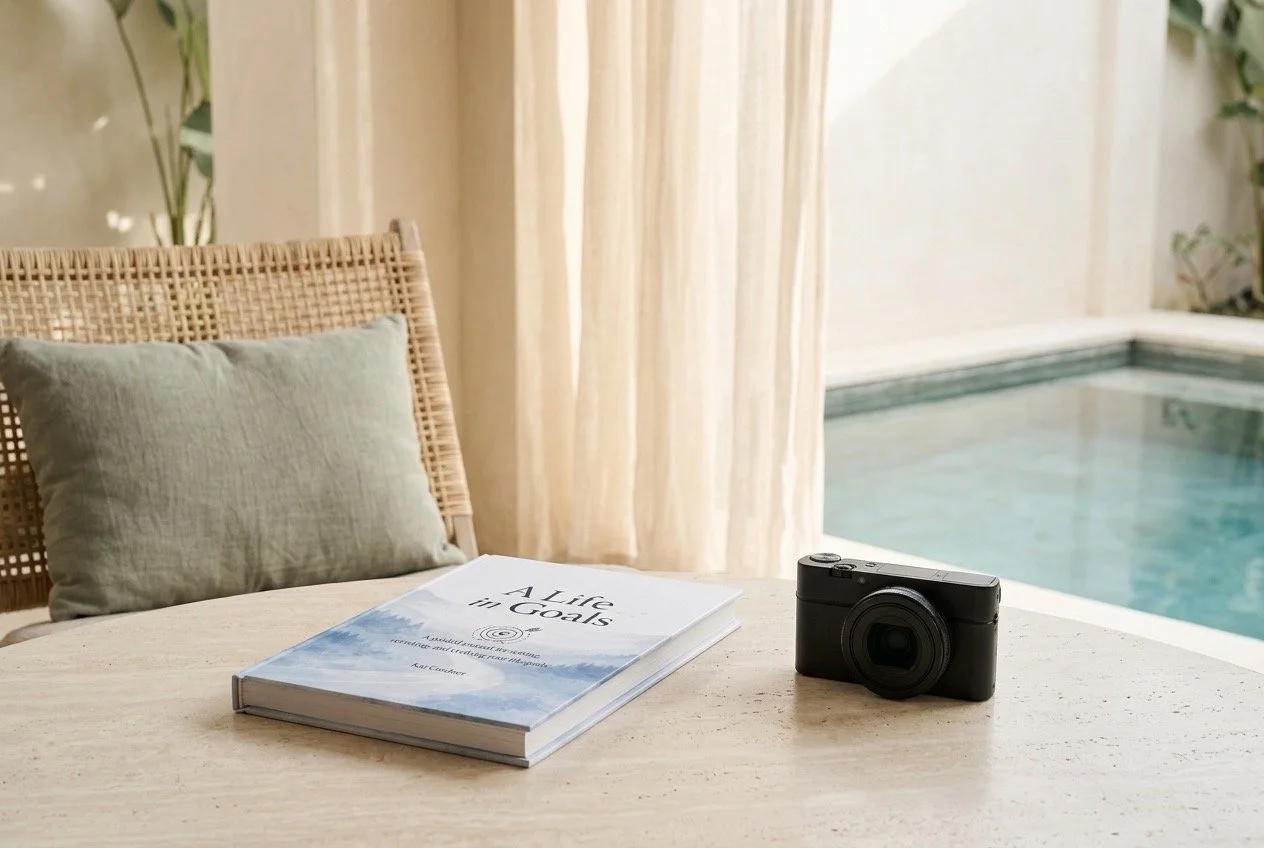
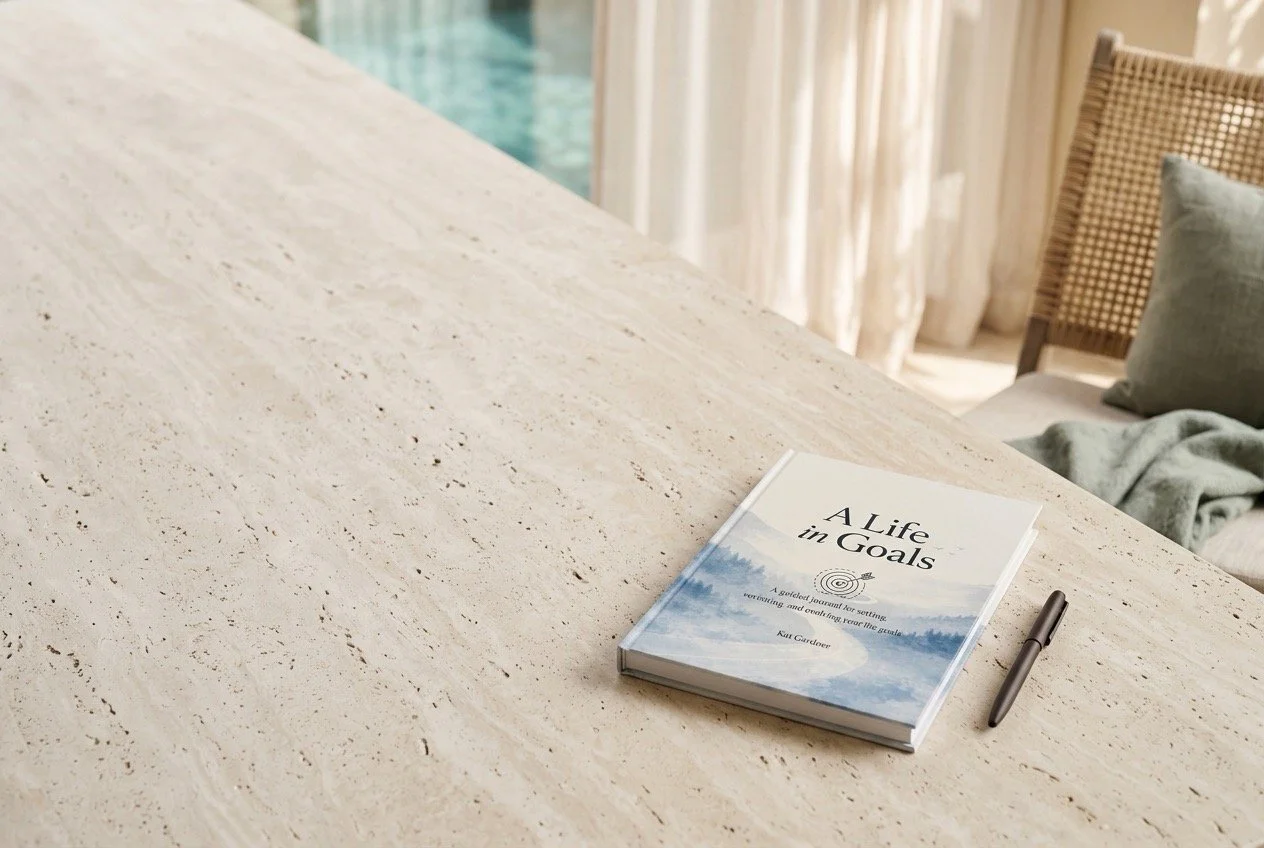
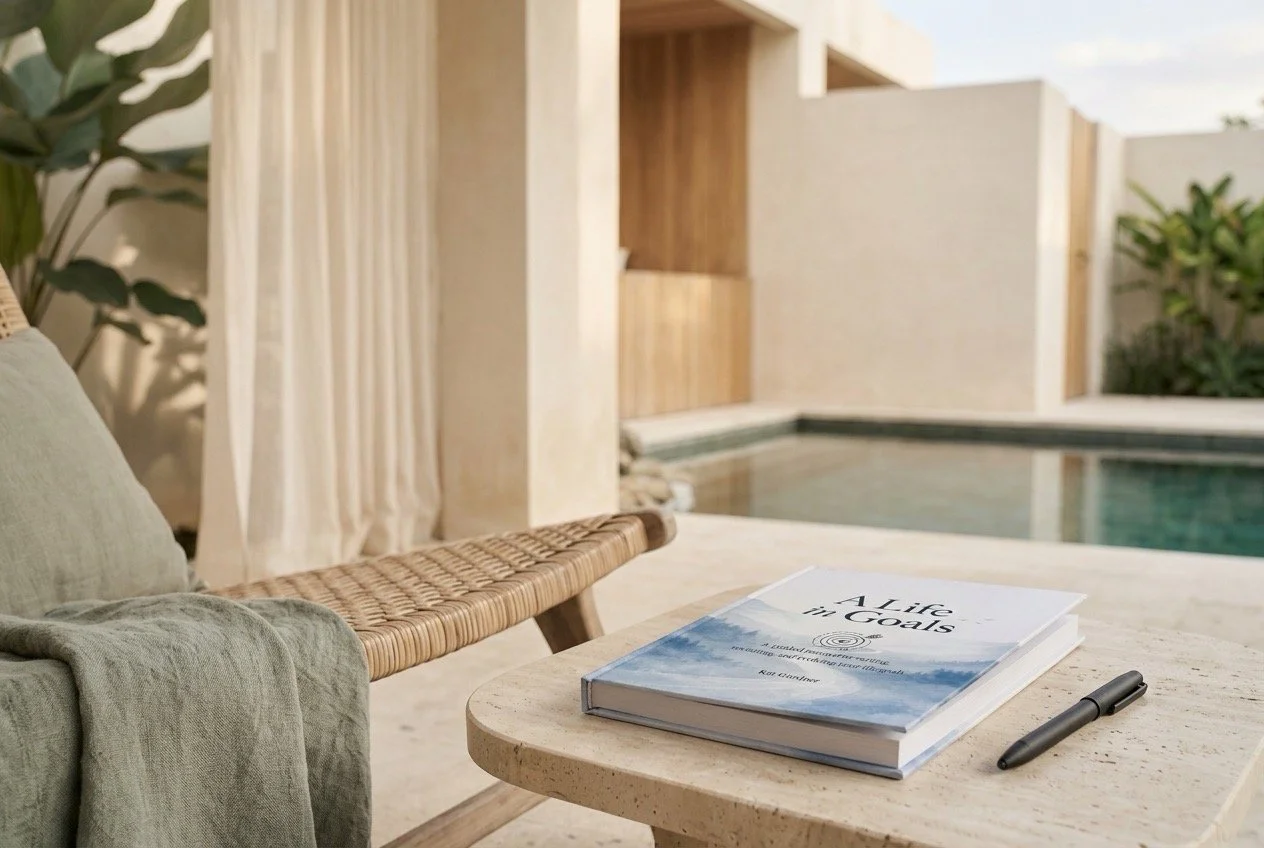
This is where A Life in Goals fits most naturally for me. It is not a dated planner and it is not designed to tell you what to do every week. It gives you somewhere to keep the bigger picture: the goals that matter now, the dreams that can wait, the foundations you want to protect and the things you may want to return to later.
The calendar can still hold the dates that genuinely matter. The journal can hold the direction underneath them.
If you want a guided journal that helps you think about your year without locking your life into twelve monthly boxes, you can explore A Life in Goals on Amazon.
If you want a simple way to plan the year, try this
You do not need a complicated annual planning day.
Sit down with a notebook or A Life in Goals and write what you want more of, less of, want to protect and keep thinking about.
Write the full list without worrying about whether everything belongs to this year.
Then circle the few things that genuinely deserve attention now.
For each of those, ask whether the next useful thing is action, information or time.
Put real dates into your calendar only where dates are useful.
Leave the rest in the journal.
Come back when life gives you a reason to.
That is enough planning.
The year does not need to be mapped perfectly to have direction
I think this is what many of us are actually looking for when we buy a planner.
Not necessarily a perfectly organised year.
Direction.
A sense that the things we care about will not disappear underneath work, appointments, errands and everything that feels urgent.
A traditional planner can help you organise the days.
But if what you really want is somewhere to keep the bigger picture, it may not be the tool you need most.
You can plan the year by knowing what matters, choosing what deserves attention now and leaving room for the rest to change.
No missed week needs catching up.
No page expires.
No new version is required every January.
The year can move.
Your goals can move with it.
And you can keep coming back to the same book, not to manage every day, but to remember what you want the days to be for.
Kat x
Creator of A Life in Goals