A practical guide to Everyday Goals in A Life in Goals: the small choices, gentle actions and ordinary-life decisions that can support bigger directions without turning life into a constant productivity project.
Everyday Goals can sound like the least exciting kind of goal.
They are not the dramatic dream, the big life direction or the thing you imagine talking about years later. They can look almost too ordinary to count: put a little money aside, call a friend, walk more often, read before bed, keep one evening free, research a place you want to visit, make time for something creative.
But ordinary life is where most of life happens.
And that is exactly why Everyday Goals matter.
They are not there to shrink a bigger goal into a hundred tiny tasks. They are the small choices and gentle actions that can bring a little more of what you want into the life you are already living.
Sometimes they support a Life Goal. Sometimes they help a Dream Goal move a little closer. Sometimes they protect an Anchor Goal. And sometimes they simply make Tuesday nicer.
All of those are valid.

Everyday Goals are not mini versions of every big goal
There is a common way of thinking about goals that says every big goal should immediately be broken into smaller and smaller actions.
Sometimes that is useful. If you are genuinely ready to work towards something, knowing the next practical step can help.
But I do not think every Life Goal or Dream Goal needs to be dismantled into a long list of mini goals the moment you write it down.
A Dream Goal can remain a dream. A Life Goal can remain broad for a while. You are allowed to know that you want more freedom, more travel or a different way of working without immediately turning the idea into a project plan.
Everyday Goals are not there to create pressure around every bigger want.
They are there for the smaller things that genuinely make sense to do now.
For a closer look at why different kinds of goals do not all need to become action plans, read The 5 Types of Goals in A Life in Goals - And Why You Need More Than One Kind.
They give a bigger direction somewhere to live
A bigger goal can be meaningful without touching every day.
But sometimes one small choice helps the direction become visible in ordinary life.
If your Life Goal is more financial freedom, an Everyday Goal might be transferring a small amount into savings each week, checking one account regularly or finally learning what one investment term means.
If your Dream Goal is to spend meaningful time in Italy one day, an Everyday Goal might be a weekly Italian lesson, a small travel fund or half an hour researching the region you keep imagining.
If an Anchor Goal is to protect your health and strength, the Everyday Goal might be a walk, a strength session, booking the appointment you have been putting off or going to bed earlier a few nights a week.
The small action does not need to carry the whole goal.
It simply gives the bigger direction one place to exist today.
This is also part of the idea behind a Goal Ecosystem, where different goals can support one another without becoming a rigid sequence. Read What Is a Goal Ecosystem? And Why Your Goals Don’t Exist in Isolation.

An Everyday Goal can also stand completely on its own
This matters just as much.
Not every small goal needs a respectable bigger reason behind it.
You can have flowers in the house more often because you like them. You can read before bed because it feels better than scrolling. You can have lunch with a friend once a month because you enjoy seeing her. You can learn to cook one meal well because it would make Sunday nicer.
There does not have to be a Life Goal called Create a More Beautiful Home sitting above the flowers.
There does not have to be a Growth Goal called Improve Culinary Skills behind the dinner.
Sometimes the Everyday Goal is enough on its own because it improves the texture of ordinary life.
Small does not mean meaningless.
They are useful when life is already full
There are seasons when a large active goal is exactly what you want.
There are also seasons when work, family, health, money or simply life itself is already taking most of your capacity.
That does not mean your own wants have to disappear completely.
An Everyday Goal can be a very gentle way of keeping something that matters connected to your life without demanding a major push.
Ten minutes of drawing. One phone call. One walk. One page of research. One afternoon protected every few weeks.
It may not look like much from the outside.
But sometimes the most useful form of progress is simply keeping a thread connected until there is more room later.
They can protect what is already good
Everyday Goals are not only about moving towards something new.
They can also help protect the parts of life you already know you value.
Call Mum every Sunday. Keep Friday dinner with your partner. See an old friend every month. Leave one weekend unplanned. Put the phone away at dinner. Walk somewhere you love.
Those are small goals, but they can sit underneath much larger things: relationships, health, time, home, calm and connection.
This is where Everyday Goals can work closely with Anchor Goals.
The Anchor tells you what matters enough to protect. The Everyday Goal can be one ordinary way you keep protecting it.
If you want to explore those foundations further, What Are Anchor Goals and What Could Yours Be? looks at what is worth protecting as life changes.

The best Everyday Goals should make life feel more aligned, not more crowded
This is the test I would use most often.
A small goal is not automatically a useful goal just because it is easy to tick off.
If your Everyday Goals become a long list of habits, routines and self-improvement tasks, they can start to feel like another planner very quickly.
Drink more water. Read twenty pages. Stretch. Meditate. Save. Meal prep. Call everyone. Learn something. Exercise. Declutter.
Any one of those may be completely right for you.
But ten of them together may simply make ordinary life feel more crowded.
The point is not to maximise the number of positive habits you can fit into a week.
The point is to choose the small things that actually connect to what matters now.
A useful question: what would make this week feel a little more like mine?
Sometimes that is a better way into an Everyday Goal than asking what you should achieve.
What would make this week feel a little more like mine?
Maybe it is going for the walk you keep missing. Maybe it is one evening with nothing booked. Maybe it is taking the camera out. Maybe it is transferring the money before it gets absorbed by everything else. Maybe it is calling the person you keep saying you want to see.
The answer does not have to be impressive.
It just has to be yours.
Everyday Goals can show you whether the bigger goal really belongs to you
There is another useful thing about small actions: they give you information.
You may think you want to learn Italian, but after a few lessons discover that what you actually love is the idea of travelling slowly, not the language itself.
You may think you want to start a business, but one small experiment shows you that you like the creative part and dislike the selling part.
You may think you want to become a runner, but realise you love walking and strength training far more.
That is not failure.
The Everyday Goal has helped you learn something about the larger idea before you built your life around it.
Small actions can move a goal forward. They can also help you edit it.
You do not need to do something every day
The word Everyday can sound as though these goals need to happen daily.
They do not.
I think of Everyday Goals as goals that belong to ordinary life rather than distant future life.
They might happen once a week, once a month, occasionally, or simply when they are useful.
A monthly dinner with friends can be an Everyday Goal. So can saving for travel, taking a weekend class, keeping a Sunday morning free or reading more often.
The category is about scale and proximity, not frequency.
You do not need another streak to maintain.
How Everyday Goals fit with the other goal types
In A Life in Goals, Everyday Goals sit alongside Life Goals, Dream Goals, Growth Goals and Anchor Goals.
They are not the final stage of a five-step process.
Sometimes they connect naturally.
A Life Goal might give you direction. A Dream Goal might hold possibility. A Growth Goal might help you learn something. An Anchor Goal might protect the foundations. An Everyday Goal might bring one small part of that into ordinary life.
But you do not need to manufacture an Everyday Goal for every bigger idea.
Some goals need action now. Some need patience. Some need protection. Some need nothing more than somewhere to live on the page.
Your goals belong to the same life, but they do not all need to do the same job.
If you would like to see how the journal brings the different sections together, How to Use A Life in Goals explains how to work with its pages and revisit goals over time.
A few Everyday Goal ideas
If you are not sure what belongs on the Everyday Goals page, think less about achievement and more about the shape of ordinary life.
Put aside a small amount for something you care about. See a friend more regularly. Read before bed. Walk somewhere beautiful. Make one evening quieter. Take a class. Cook something you love. Do one piece of research about a future idea. Keep a weekend unplanned. Spend an hour making something. Call someone. Book the appointment. Buy the flowers.
Any one of those can matter.
Not because it is secretly the first step in a grand transformation.
Because it changes a small part of the life you are actually living.
A place for the small goals that make ordinary life feel better
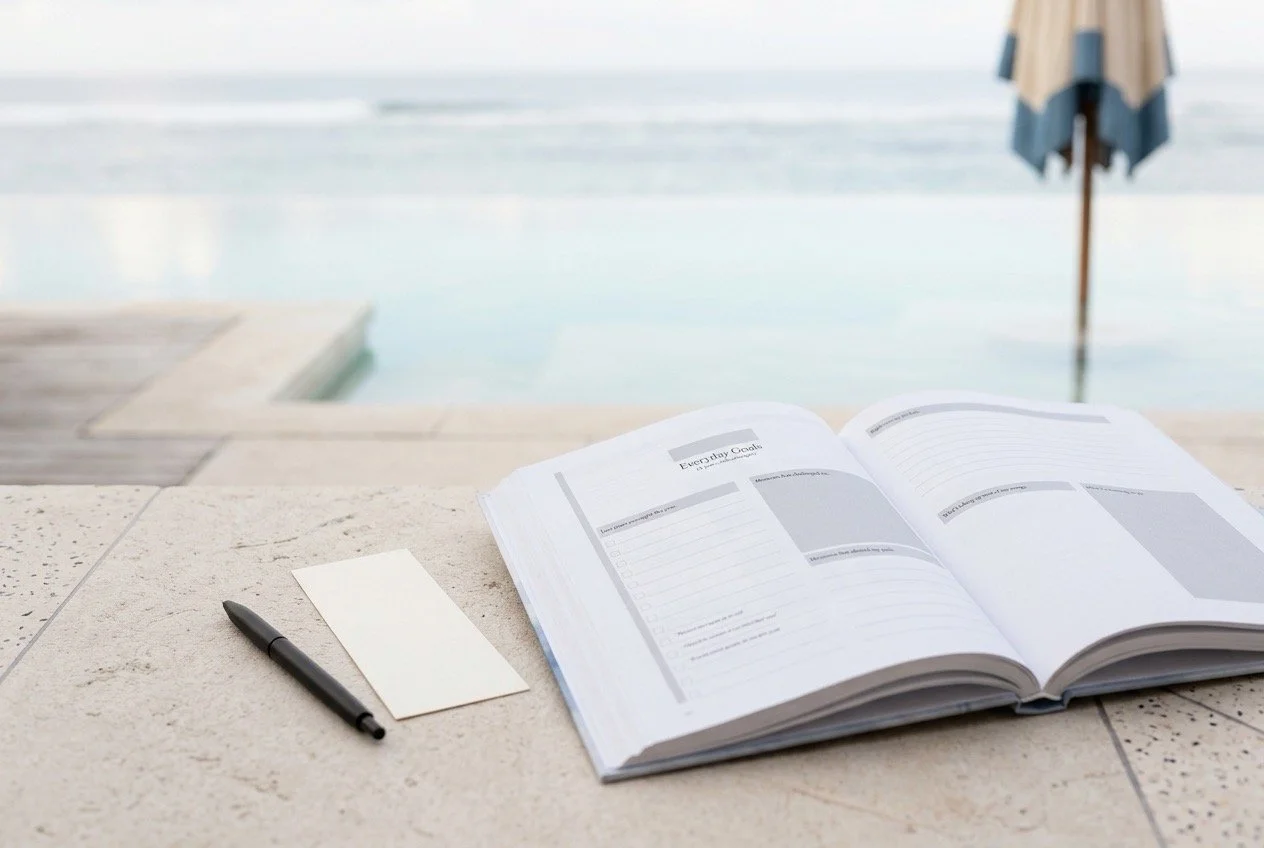
This is one of the reasons Everyday Goals have their own place in A Life in Goals. They do not need to be the smallest step in a bigger plan, and they do not need to become another habit tracker.
They can simply hold the ordinary choices that make life feel a little more aligned now, whether they support a Life Goal, protect an Anchor Goal, bring a Dream Goal slightly closer or stand completely on their own.
If you want a guided journal that gives those quieter, everyday goals somewhere to sit alongside the bigger picture, you can explore A Life in Goals on Amazon.
Explore A Life in Goals on Amazon
The small things are not separate from the life you want
We often imagine our goals as something happening out in the future.
The trip. The house. The financial freedom. The stronger body. The creative life. The work that fits better.
But life is not only the eventual outcome.
It is also the way your weeks feel while you are getting there, waiting, changing your mind or deciding what matters next.
Everyday Goals give you permission to care about that part too.
They remind you that a life can move gently in the right direction without every day becoming a project.
And sometimes the smallest goal is not small at all.
It is simply the place where the life you want begins to show up in the life you already have.
Kat x
Creator of A Life in Goals