The Goal I Wrote Down That Took Much Longer Than I Expected
A trading course stayed in my old goal notebook for more than 20 years before I finally completed it. I was not steadily working towards it all that time, and I returned with different questions and experience. This personal story explores why a goal can wait, how curiosity brings it back and why some old goals can simply be left behind.

The Best Journals for Setting Goals That Go Beyond One Year
A journal for a focused project does a different job from one that holds a dream for years. I compare several formats, including structured planners, daily reflection and a plain notebook, and explain where my own A Life in Goals fits. Start with what you want the journal to help you do, rather than looking for one best book for everyone.

Why January Is a Good Time to Think About Your Life, Not Just Your Year
January can be a useful moment to look up without giving every goal another twelve-month deadline. I explore what you want life to contain, which dreams still matter and what is already good enough to protect. From there, one part of a longer-term goal may deserve attention this year, while other ideas can wait.

How to Plan Your Year When You Don’t Want a Traditional Planner
You can want direction for the year without wanting a box for every Tuesday. I look at keeping a full list of possibilities, choosing only a few active goals and putting genuine dates in the calendar. The rest can stay in your journal until life gives you a reason to return, without missed weeks to catch up on.

When the Children Get Older, What Do You Want for You?
As children become more independent, a little space may return before you know what you want to do with it. This reflection asks which old interests still appeal, what matters now and how personal goals can sit alongside caring for your family. You can leave some time unclaimed while you work out what would make the next part of life feel like yours.
Why You Don’t Need to Finish Your Goal Journal
A Life in Goals can stay unfinished, with blank pages, crossed-out words and thoughts added months or years later. I explain why skipping sections and changing your mind can be useful, and how an untidy old notebook became something I treasure. Come back when you have something to add, rather than inventing goals just to fill the book.

How to Use A Life in Goals
A simple guide to using A Life in Goals, from where to begin and how the different goal types work, to leaving pages blank, revisiting old goals and letting your journal grow with your life over time.

Setting Goals in Your 50s: Why There Is Still So Much to Look Forward To
Setting goals in your 50s can begin with what you want more of now, whether that is travel, learning, time with friends or a different way of working. Kat Gardner reflects on how experience can change your priorities, why some goals become possible later and why you do not need a five-year plan to look forward to what comes next.

A Life in Goals: A Different Way to Think About Goal Setting
Goal setting doesn’t have to be about deadlines, productivity or achieving more. A Life in Goals takes a different approach, giving you space to think about what you want from your life, revisit your goals as things change and keep the ideas that may take years to become part of your story.

Why Writing Down Your Goals Matters
Writing down a goal does more than help you remember it. It gives a passing thought somewhere to live, helps you understand what you really want and creates a record you can return to as your life changes.
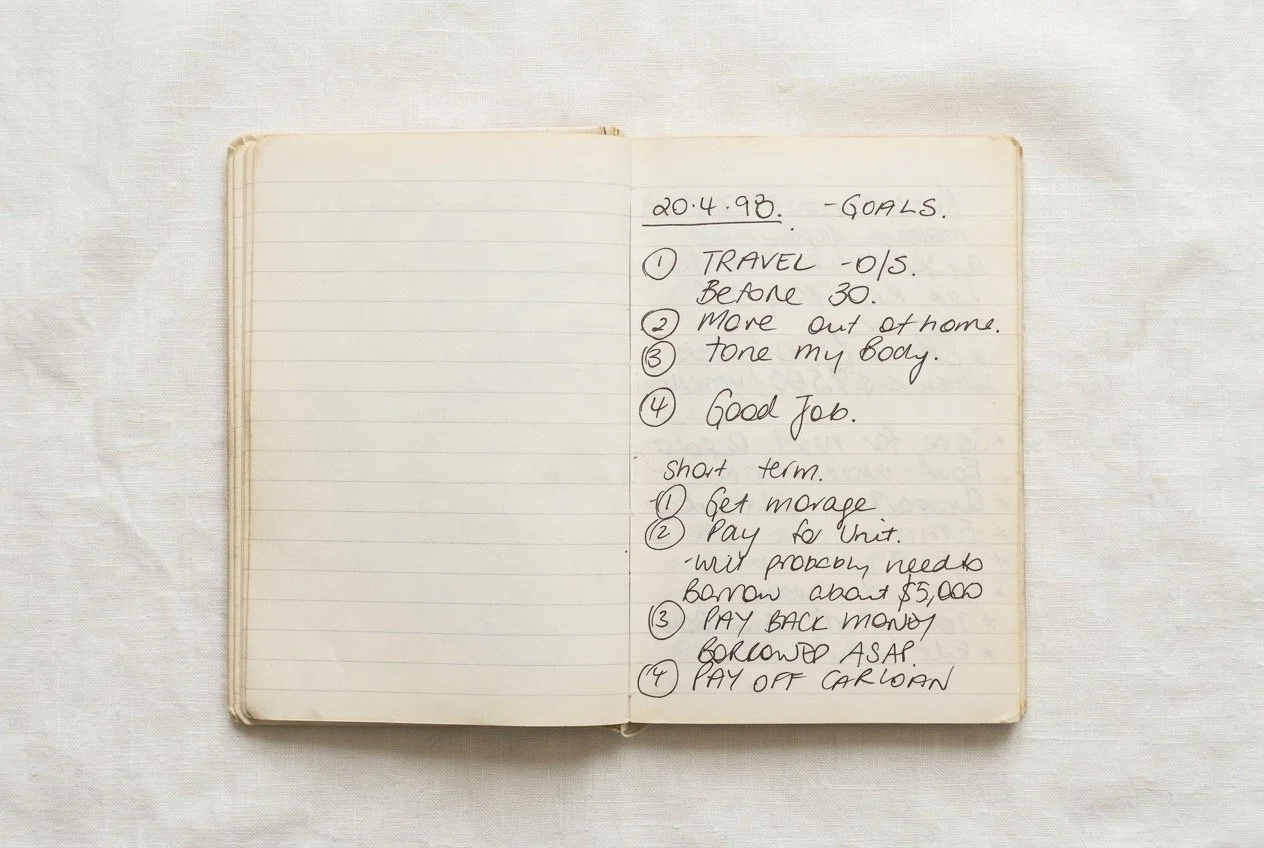
The Little Book That Eventually Became A Life in Goals
More than 25 years ago, I started writing my life goals in a tiny notebook. Looking through those pages now, I can see the beginnings of the idea behind A Life in Goals and why I wanted to create a guided journal designed to be kept, revisited and changed as life changes.